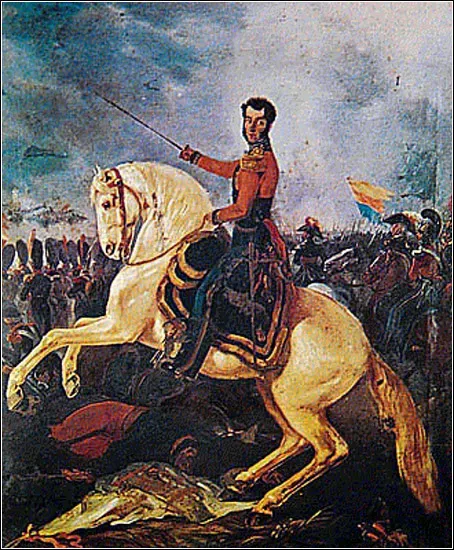
On 25 May 1809, the Spanish Empire began to die of a syllogism. The end of Spain’s three-century dominion in the Americas - once the largest and most lucrative colonial empire on earth - was not initiated by a massive army, a dramatic naval landing, or a bloody peasant uprising. It was initiated by a dry, elegant logic puzzle. In the university city of Chuquisaca, high in the Andes of Upper Peru, a group of local lawyers and judges used their legal training to commit a brilliant act of intellectual treason. They did not shout for the King’s head; instead, they argued with impeccable Spanish legality that the King’s head no longer mattered.
The background was a textbook illustration of imperial collapse. By 1809, the Spanish metropole was too weak to hold itself together, let alone its massive colonies across the Atlantic. Napoleon’s armies had invaded the Iberian Peninsula, captured King Ferdinand VII, and placed Joseph Bonaparte on the throne in Madrid. Juntas had formed across Spain to coordinate resistance, but their authority was fragile and their future uncertain. Back in Chuquisaca, the governor-intendant, Ramón García de León y Pizarro, and the archbishop were paralysed. They knew they could expect no help, no funding, and no clear orders from Europe.
As Lenin famously observed, revolutions happen when the rulers can no longer govern and the ruled will no longer submit. In Upper Peru, both sides of that equation collided. Pizarro and his administration were desperate to preserve their positions. They were even tempted by letters from Princess Carlota Joaquina, the sister of Ferdinand VII who had fled to Brazil with her Portuguese husband. Carlota proposed herself as regent of Spain’s American territories, a prospect that horrified the local elites. The Spanish administrators began to compromise, negotiate, and stall.
I find the response of the local intellectuals far more revolutionary than any barricade. At the University of Saint Francis Xavier, one of the oldest in the Americas, the faculty and its brilliant young graduates did not panic. Led by a young lawyer named Bernardo de Monteagudo, they formulated what became known as the “Syllogism of Chuquisaca” - a masterpiece of political jujitsu. It was constructed with beautiful, pedantic simplicity.
First, they argued, the Americas were not colonies of Spain itself, but the personal fiefdom of the King of Spain under the original sixteenth-century charters. Second, the King was currently captive in France and unable to exercise his sovereignty. The conclusion was devastating: therefore, the right of governance reverted entirely to the local communities in his name, and the colonial administrators who represented the Spanish state had lost their legal mandate.
It was a brilliant manoeuvre. The lawyers of Chuquisaca did not use the radical language of the French Revolution, which would have instantly alienated the conservative local elites and invited swift execution. They used the ultimate language of absolute loyalty to the Crown to justify immediate, absolute self-determination. They argued that by deposing the governor, they were actually protecting the King’s personal rights against a weak, compromised administration that was ready to sell out to the Portuguese or the French.
On 25 May 1809, the theory met the street. Rumours swept Chuquisaca that Pizarro was preparing to arrest the judges of the Real Audiencia who had embraced the syllogism. A crowd gathered. The church bells of the Basilica of Saint Francis - known today as the “Campana de la Libertad” - began to ring, summoning the citizens. By nightfall, the crowd had forced their way into the governor’s palace. Pizarro, realising his military forces were tiny and his legal authority had been systematically dismantled, resigned. The judges of the Audiencia formed a junta to govern the province.
On the surface, the new junta was conservative, swearing eternal loyalty to the captive Ferdinand VII. But the intellectual dam had broken. In July, a much more radical uprising erupted in nearby La Paz, led by Pedro Domingo Murillo. The revolutionaries there formed the Junta Tuitiva and openly declared independence from Spain. The Spanish viceroys - Cisneros in Buenos Aires and Abascal in Lima - reacted with predictable, brutal force. By the end of the year, both revolts were crushed. Murillo was hanged in La Paz. Monteagudo escaped into the hills, eventually making his way south to continue the fight.
The military victory of the viceroys was a temporary stay of execution. The syllogism of Chuquisaca could not be hanged. Within months, the legal and philosophical arguments developed in the classrooms of Saint Francis Xavier travelled down the colonial trade routes to Buenos Aires. In May 1810, the citizens of that city used the exact same logic to depose their viceroy, initiating the May Revolution and permanently severing the Viceroyalty of the Río de la Plata from the Spanish Crown. The Spanish Latin American empire did not fall because its armies were defeated in a single massive clash; it fell because the university lawyers of Upper Peru had hollowed out its intellectual legitimacy.
The “First Cry of Freedom” is commemorated today in Bolivia as the beginning of their long, twenty-six-year war of independence. It is a reminder that empires are held together by belief as much as by bayonets. A weak metropole can maintain its dominion only as long as its subjects accept the fiction of its authority. Once the lawyers of Chuquisaca proved that the King’s absence meant the colony belonged to itself, the end of the Spanish Empire in South America was no longer a question of if, but when. The logic was sound, the conclusion was inevitable, and Spain spent the next two decades trying to defeat an argument with infantry. They lost.