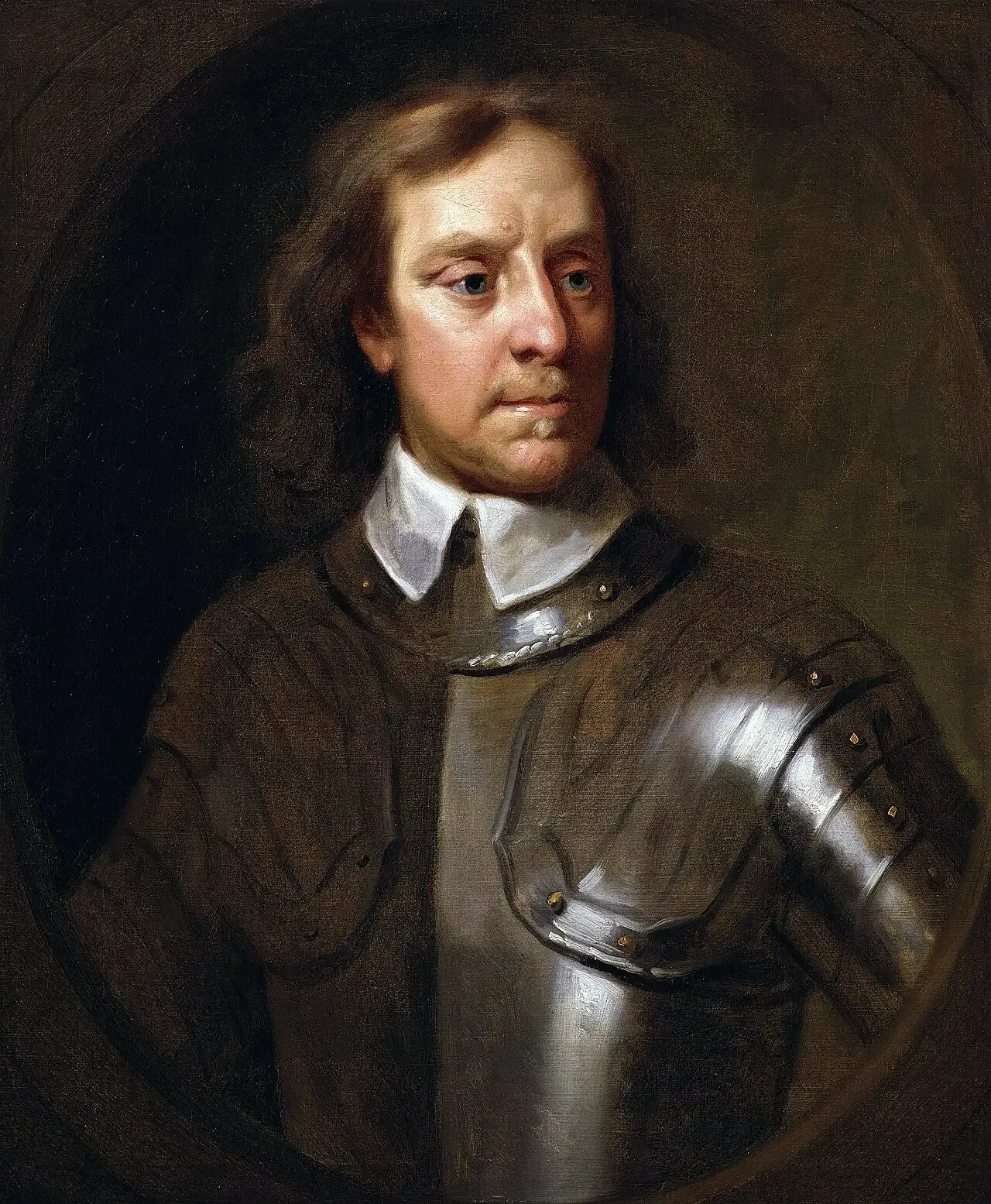
A file of musketeers waited in the lobby. Oliver Cromwell sat inside the chamber listening to the debate on the Bill for a New Representative, which was about to pass in a form that would have let the sitting members keep their seats without standing for election. He rose, removed his hat, and began quietly. Then he put the hat back on, stamped his foot, and stopped being quiet. “You have sat too long here for any good you have been doing. Depart, I say, and let us have done with you. In the name of God, go.” He pointed at the Speaker’s mace - the gilded club that was the physical emblem of parliamentary authority in England - and called it “a bauble.” A soldier picked it up. The members filed out. On 20 April 1653, the body that had executed a king, abolished the House of Lords, and governed England for four and a half years was emptied by the general it had commanded.
The Rump was not a parliament elected by anyone living in 1653. It was what remained of the Long Parliament of 1640, which Colonel Thomas Pride had carved down on 6 December 1648 by standing at the door of the Commons with a list and turning away - at sword point - every Presbyterian member who opposed putting Charles I on trial. Roughly 140 MPs were excluded or arrested. The remainder, about seventy-five active members willing to do what the army wanted, became the Rump. They tried the king that January, beheaded him on 30 January 1649, abolished the monarchy and the Lords in March, and proclaimed England a Commonwealth in May. Everything old and constitutional about the country - the crown, the lords, the Elizabethan settlement - had been cut down by a body that represented neither a recent election nor any kind of broad consent. Its authority came from the pikes pointing its way.
What it did with its four years was mostly disappoint the men who had made it possible. Reformers wanted the law overhauled, the church reorganised, the tithe system abolished, the courts cleared out. The Rump appointed commissions, heard submissions, and produced almost nothing. Lawyers who sat on the committees on legal reform ensured nothing reached the statute book that might reduce their fees. The First Anglo-Dutch War, begun in 1652 over trade and the Navigation Acts, drained the treasury and delivered no decisive outcome. Army pay ran months in arrears. Cromwell and his senior officers, whose entire political weight rested on the idea that the army had fought for something more than its own interest, watched the body they had underwritten behave as any parliament behaves: protecting the men inside the room.
The trigger was the Bill for a New Representative. The army had been pressing for months for a proper dissolution and a fresh election. The Rump’s draft response proposed something else: existing members would keep their seats automatically, “recruiter” elections would fill only the vacancies, and the sitting parliament would vet the incoming members itself. The men in the room would choose the men joining them. Cromwell had spent the night of 19 April in a meeting with officers and MPs attempting to block the bill. He believed he had an understanding that the Commons would at least pause. On the morning of the 20th, his informants told him the bill was about to pass in its original form. He walked to Westminster with a company of musketeers.
What Cromwell thought would follow the dissolution is harder to establish than what preceded it. He had no written plan. He had drafted no successor constitution. He acted, as he did repeatedly in the years that followed, because he believed the providence of God was in the moment and a godly man struck when the moment came. The difficulty was that providence had not supplied constitutional drafting. The Council of Officers convened and produced the Nominated Assembly - 140 men selected by Cromwell and the officers from lists submitted by independent congregations, known to history as Barebone’s Parliament after one of its more vivid members, Praise-God Barebone, a leather merchant from Fleet Street. It was meant to be the parliament of the saints. It sat from July to December 1653, split between radicals who wanted to abolish tithes and the common law within the week and moderates who panicked, and on 12 December the moderates voted it out of existence and handed power back to Cromwell.
Four days later, the Instrument of Government - drafted by Major-General John Lambert - installed Cromwell as Lord Protector. It was the only written constitution England has ever had, and it lasted precisely as long as Cromwell needed it to. The First Protectorate Parliament in 1654 tried to rewrite it and was dissolved. The second, in 1656, offered him the crown, which he refused on 8 May 1657 after six weeks of visible agonising. The Humble Petition and Advice revised the settlement, restored a second chamber under a different name, and in functional terms reinstated the monarchy without using the word. Cromwell died on 3 September 1658. His son Richard, who had no military record and no taste for the office, lasted eight months before the army forced him out. The Rump - the same Rump dismissed in 1653 - was recalled. It was dissolved again. It was recalled again. In March 1660 it voted to dissolve itself, called fresh elections, and the new Convention Parliament voted in April to restore the Stuarts. Charles II landed at Dover on 25 May 1660.
The lesson the men of 1653 declined to draw, and that the men of 1660 wrote back into English memory, was that power taken by force required force to keep. Cromwell had dissolved the Rump because it was not reforming England fast enough or selflessly enough for his taste. He spent the next five years governing through a constitution his own officers had written, through two parliaments he could not work with, through a regime of Major-Generals he had to withdraw when the counties refused to pay for them, and through an offered crown he could not bring himself to take. When he died, the whole structure lasted eleven months. On 30 January 1661 - the twelfth anniversary of Charles I’s execution - Cromwell’s corpse was dug out of Westminster Abbey, hanged at Tyburn, beheaded, and his head mounted on a pole above Westminster Hall, where it stayed for roughly twenty-five years. The mace he had called a bauble is still carried into the Commons every sitting day.