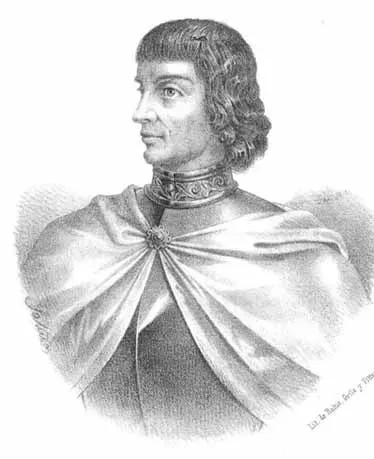
On 29th April 1483, a Guanche leader called Tenesor Semidán surrendered at the Fortress of Ansite in the south of Gran Canaria, ending five years of resistance against the Kingdom of Castile. He was the king of Gáldar, the most powerful of the island’s territories. After his surrender he was taken to Spain, baptised Fernando Guanarteme, and returned to the island as a collaborator. He spent the rest of his life helping the Castilians subdue the remaining Canary Islands. The conquest was over. The experiment could begin.
That word - experiment - is not rhetorical. Historians of the Atlantic world have called Gran Canaria a laboratory, meaning it precisely. The methods the Spanish applied in the Caribbean after 1492 were not invented there. They were transplanted from the Canaries, where Castile had spent the previous decade working out what conquest and colonisation required in practice.
The conquest itself was a messy, protracted affair. Private noble-funded expeditions had been nibbling at the outer Canary Islands since the early 15th century, but Gran Canaria - the main island, the most populated, the most resistant - proved too large and too fierce for private enterprise. Queen Isabella I took over the effort directly in 1478, funding it from the Crown, and turned it into what the sources call the Conquista Realenga: the Royal Conquest. This mattered. It was the first time the Spanish monarchy managed colonial expansion as a state project rather than subcontracting it to aristocrats with their own agendas. The model would be applied, at much larger scale, to the Americas within a generation.
Pedro de Vera commanded the final campaign. He was a capable and brutal commander - the two things tended to go together in the Canaries. The main resistance leader, a warrior called Doramas, was killed in a skirmish near Arucas around 1481. His death broke the organised military resistance and left the population’s survival dependent on Tenesor Semidán’s decision at Ansite two years later. Doramas was later granted a kind of legendary status by Canarian writers, as the symbol of indigenous resistance. Tenesor Semidán’s decision to collaborate rather than die got him rather less sympathy, though what else he was supposed to do is hard to specify.
What followed the surrender was a demographic catastrophe. Large numbers of the indigenous Guanche population were enslaved - slavery was legal under Castilian law for those taken in a “just war,” and the conquest qualified. Others were deported to the Spanish mainland. Disease, dispossession, and forced labour killed the rest. Within a few generations, the pre-conquest population had been effectively destroyed as a distinct group, absorbed into the colonial settler society that replaced it.
The economic machinery installed on Gran Canaria after 1483 was sugar. The island’s terrain and climate suited cane cultivation, and Castilian colonists established plantations using indigenous and then African slave labour. By the time Columbus made his first Atlantic crossing in 1492, the Canarian sugar economy was already running. He stopped in Las Palmas de Gran Canaria to repair his ships on the way to what he called the Indies. He was not passing through a frontier outpost: he was sailing from one colonial economy towards the site of the next one.
The connection between Gran Canaria and the Americas is not merely chronological. The specific combination of elements - Crown-funded military conquest, plantation agriculture, forced indigenous labour, Christian conversion as both sincere religious purpose and instrument of cultural erasure, the legal category of the “just war” to justify enslavement - was assembled and debugged on the island before being shipped across the ocean. The encomienda system that organised indigenous labour in the Caribbean and Mexico was a refinement of what the Spanish had already been running in the Canaries. The missionaries who arrived behind the soldiers, operating on the assumption that baptism made the conquered people manageable, had practised the same logic in Las Palmas.
Isabella’s decision to make the conquest of Gran Canaria a Crown operation rather than a noble franchise had consequences that ran for centuries. It created the precedent that the Americas would be royal territory, not baronies handed out to whichever adventurer could raise the ships. The Spanish Crown would grant licences and take a share of the profits, but the territories belonged to the monarchs, not the conquistadors. That structure - centralised, state-directed, with the Church as the Crown’s administrative partner in managing indigenous populations - was built first in the Canaries and exported everywhere else.
The man who surrendered at Ansite in April 1483 never got his island back. Fernando Guanarteme died a Christian and a Castilian ally, his name a reminder that the conquered sometimes survive by becoming, at least officially, their conquerors. The island he ruled was, within a generation, speaking Spanish, producing sugar, and watching ships leave for a new world that would be organised along exactly the lines his defeat had established.
Columbus stopped in Las Palmas for repairs in September 1492. He had been here before, in 1478, when the conquest was still underway. He knew what this place was, and what it had become. When he reached the Caribbean and started making decisions about how to govern what he found, he was not working from theory. He had seen the system running.