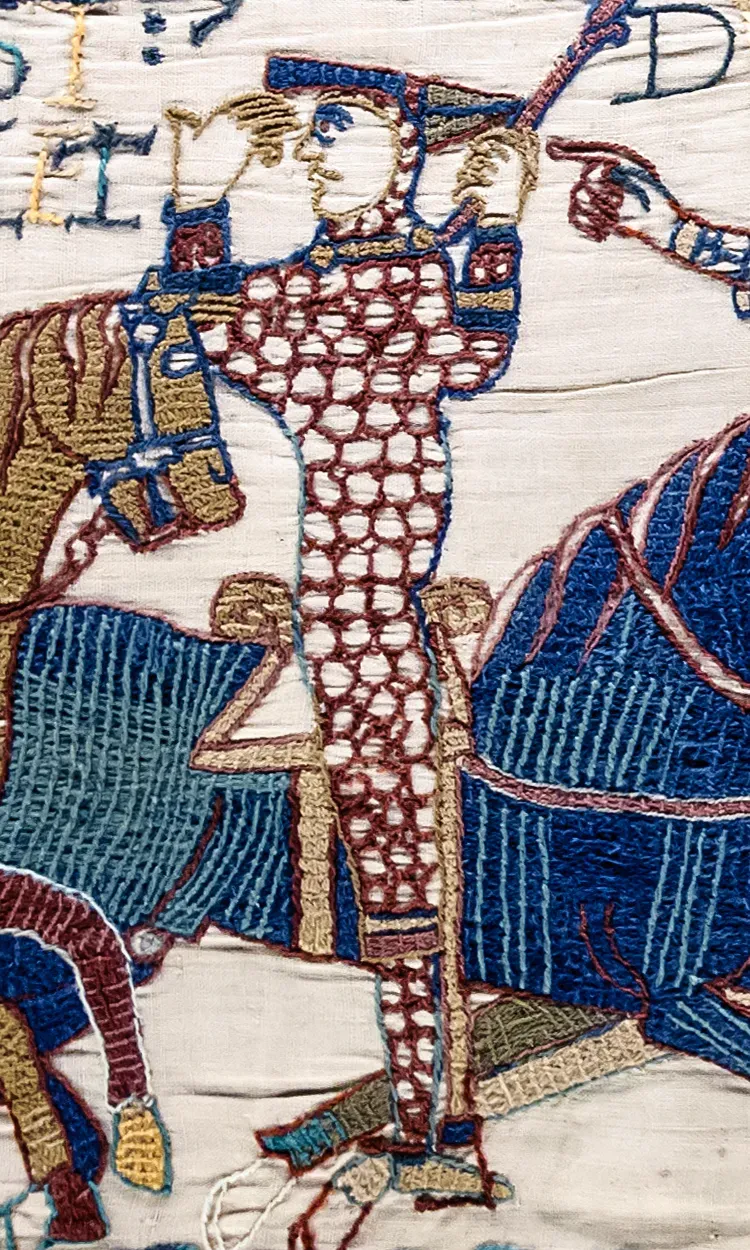
Bishop Æthelwine of Durham warned Robert de Comines that a rebel army was waiting for him. The warning was direct, the intelligence reliable, and the implication unmistakable. Robert rode in anyway. On 28 January 1069, he and most of the men he had brought into the city were surrounded and slaughtered. The rebels then turned their attention to York and killed the garrison’s commander. It was a clear message that Northumbria was not interested in Norman rule.
William the Conqueror heard the message. His response was the Harrying of the North - a systematic destruction of the entire region during the winter of 1069-70 that modern scholars have called, without much argument, one of the worst atrocities of medieval England, and some have called genocide.
To understand why Robert de Comines even existed as a problem requires going back three years. After Hastings and Harold’s death in 1066, English resistance clustered around Edgar Ætheling, a teenage grandson of Edmund Ironside with a legitimate claim to the throne. Edgar and his supporters submitted to William at Berkhamsted in December 1066, but that submission did not hold north of the Humber. Northumbria had been semi-autonomous for a century under a series of arrangements with the Anglo-Saxon kings, and the nobility there had no particular reason to accept a Norman duke because he had won a battle in Sussex.
William’s first attempt to solve this was to appoint Copsi, a native Northumbrian who had fought at Stamford Bridge on the losing side, as earl. Copsi was murdered by a local rival after five weeks. The man who killed him was himself killed within months. His replacement, Cospatrick, bought the earldom from William and then joined Edgar Ætheling in rebellion. Two earls murdered and one defecting in the space of about eighteen months was not a promising record, and William decided the answer was to appoint someone who would hold Northumbria by force rather than local accommodation. He chose Robert de Comines, a Norman who arrived in the north in January 1069 with a military party and every intention of making the region compliant.
Then Bishop Æthelwine warned him about the rebels, and Robert ignored it, and the story became what it became.
William marched north quickly and pushed the rebels back from York, but the crisis had not ended. Edgar Ætheling appealed to Sweyn II of Denmark, who assembled a fleet and sailed down England’s east coast. The combined force retook York in autumn 1069. William marched from Nottingham with his army, and by the time he reached York, the rebel force had dispersed - Edgar back to Scotland, the Danes back to their ships in the Humber. William paid the Danes a danegeld to go home without a fight. That left the English rebels. They would not meet his army in pitched battle, so he did what armies have done to civilian populations throughout recorded history when they cannot catch the fighters: he attacked the food supply.
He spent Christmas 1069 in York. His army began burning villages in January 1070 - from the Humber to the Tees, the length of Yorkshire and beyond. Crops stored for winter were destroyed. Livestock was slaughtered. Ploughs and tools were burned. The operational logic was textbook scorched earth: deny the rebels any source of shelter or sustenance, and they would cease to exist as a military problem. The secondary effect was that the civilian population, which had nothing to do with the rebellion, began to starve.
Orderic Vitalis, writing fifty years later, put the death toll at more than 100,000. That figure is almost certainly rhetorical - the total population of England at the time was around 2.25 million - but the chroniclers who were closer to the events describe something that clearly overwhelmed even medieval standards of what conquest was supposed to look like. Orderic wrote that William “made no effort to control his fury, punishing the innocent with the guilty.” Florence of Worcester described him “spending the whole winter in laying waste the country, slaughtering the inhabitants.” Symeon of Durham recorded survivors reduced to selling themselves into slavery to avoid starvation, and others reduced to eating the flesh of the dead.
The Domesday Book, compiled in 1086 - seventeen years after the Harrying - provides the hard numbers. In Yorkshire, 60 per cent of all holdings were recorded as “waste,” meaning productive land that had ceased to be productive. In some areas the figure was higher. Estate after estate appears in the record with the notation wasteas est - “it is wasted.” The value of Yorkshire estates had fallen catastrophically between 1066 and 1086: Hugh, Earl of Chester’s Yorkshire holdings had been worth £260 before the conquest and were worth £10.10s by 1086. Drogo de la Beuvrière had gone from £553 to £93. The Domesday commissioners found only 25 per cent of the pre-conquest population and plough teams still in place. The livestock losses recorded run to 80,000 oxen.
Archaeologists who have examined the pattern of village layouts in Yorkshire and County Durham have noticed something that does not look like organic settlement growth. Across much of both counties, villages are arranged in unusually regular plans - straight rows, systematic spacing - of the kind that emerges when a landscape is rebuilt from near-scratch at a single point in time rather than accumulating organically over centuries. The dating of that rebuilding is consistent with the aftermath of the Harrying. What the Domesday commissioners recorded as “waste” was, in many cases, not empty land but a landscape whose previous inhabitants had not returned.
Historians argue about whether William could have done as much damage as the chronicles suggest with the army he had available. Some propose that Danish or Scottish raiding contributed to the devastation recorded in the Domesday Book; others argue the sheer scale of wasted manors implies Norman effort on a systematic level. The argument matters less than its conclusion: that the north of England in the decades after 1069 was a different and diminished place, and that the evidence of deliberate destruction is too consistent and too geographically concentrated to be explained away by accident or exaggeration.
What Robert de Comines started when he ignored Æthelwine’s warning was a short rebellion that ended badly for him. What William started in response was a winter of burning that reshaped the population of northern England for generations. The Domesday Book still carries the arithmetic of it. The field patterns of Yorkshire carry the geometry of it. The north recovered, eventually, but the recovery took so long and required such deliberate repopulation by Norman lords willing to rent to anyone not obviously disloyal - that it looked less like recovery and more like replacement. Robert de Comines rode into Durham on a January morning against every piece of advice available to him, and the world that existed before that morning did not come back.