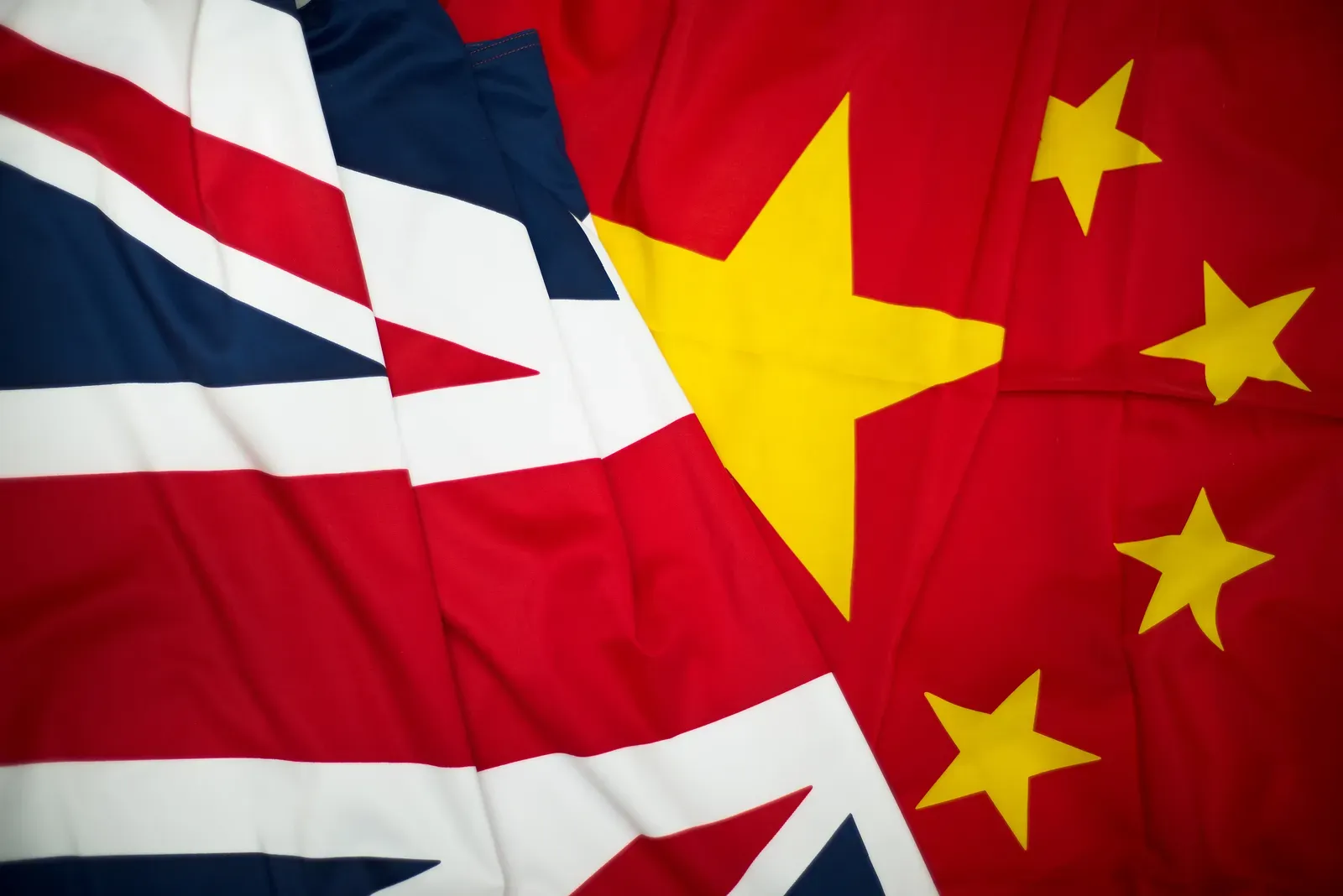
At the stroke of midnight on 30 June 1997, in the new wing of the Hong Kong Convention and Exhibition Centre, a British Royal Marines band played “God Save the Queen” for the last time on Chinese soil. The Union Jack came down in a driving rainstorm. The five-starred flag of the People’s Republic went up in its place. Charles, Prince of Wales, read a farewell address on behalf of his mother. Tony Blair, seven weeks into his premiership, stood a few feet from Chinese President Jiang Zemin. Madeleine Albright represented Washington, though she cut her attendance short in protest at Beijing’s decision to dissolve Hong Kong’s elected legislature before she had even landed. A hundred and fifty-six years of British rule ended in the time it takes a flag to travel down a pole.
The count of 156 years runs back to January 1841, when a British naval officer planted a flag at Possession Point on Hong Kong Island and claimed it for the crown, a seizure formalised the following year in the Treaty of Nanking that ended the First Opium War. I have traced that opening chapter - the opium, the gunboats, the century of humiliation it set running - elsewhere on this site. What matters for 1997 is a detail usually skipped in the shorthand version: Hong Kong Island and the Kowloon peninsula were ceded outright, in perpetuity, no expiry date attached. The New Territories - the mainland hinterland that supplied the colony’s water and more than ninety per cent of its land - were never ceded at all. Britain only leased them, for ninety-nine years, under a convention signed in Peking on 9 June 1898. The British negotiator picked ninety-nine years because he considered it “as good as forever.” It came into force on 1 July 1898. It expired on 30 June 1997, to the day. Without that mainland hinterland, Hong Kong Island alone had no water supply and no room to grow, which is what actually forced London to the table in the 1980s - not sentiment, not decolonisation fashion, a lease running out.
When Governor Murray MacLehose flew to Beijing in 1979 to test whether China might quietly extend it, Deng Xiaoping told him plainly that China intended to resume sovereignty over the whole territory, full stop. Margaret Thatcher tried again in person in September 1982, fresh off the Falklands and in no mood to be told no. She came out of the Great Hall of the People so rattled by Deng’s refusal to negotiate the point that she stumbled on the steps outside and fell to one knee - an image Chinese state media replayed for years as proof of whose terms these were. What Deng offered instead of continued British administration was a formula he had already begun road-testing for Taiwan: “one country, two systems.” Hong Kong would keep its capitalist economy, its own currency, its courts, and its way of life, unchanged for fifty years, while sovereignty passed to Beijing. The Sino-British Joint Declaration locking in that bargain was signed in 1984, and the Basic Law, Hong Kong’s post-handover constitution, followed in 1990. Deng died on 19 February 1997, four months before the ceremony, having spent nearly two decades designing a handover he never lived to watch.
Into the gap between the 1984 declaration and the 1997 deadline stepped Chris Patten, the last governor, who arrived in 1992 and did something no governor had bothered doing in a century and a half: he tried to make the place more democratic on his way out the door. He widened the electorate for the Legislative Council’s functional constituencies, giving almost every working adult in Hong Kong a vote where previously only a narrow elite had one. Beijing’s response was not measured. Its Hong Kong and Macau affairs chief, Lu Ping, branded Patten a “sinner condemned for a thousand generations.” State media settled on “fatty Pang” and “the whore of the East” and kept at it for five years. None of it changed the outcome: Beijing dissolved Patten’s legislature the moment the flag changed and installed a hand-picked provisional council in its place, which is the specific insult Albright was registering when she left the ceremony early.
Prince Charles kept a private diary of the trip, later leaked to a newspaper he successfully sued over it, and it is a better account of the evening than any official transcript. He titled it “The Handover of Hong Kong, or The Great Chinese Takeaway.” He described the Chinese delegation surrounding Jiang Zemin as a “group of appalling old waxworks,” Jiang’s remarks as a “propaganda speech,” and the ceremony itself as an “awful Soviet-style” display, culminating in Chinese soldiers goose-stepping onto the stage to haul down the Union Jack in what he called a “ridiculous rigmarole.” Buried in the same diary, though, is a line with no punchline attached: he wrote of a “sneaking worry about creeping corruption and the gradual undermining of Hong Kong’s greatest asset - the rule of law.” A prince complaining about waxworks is comedy. A prince correctly forecasting the next three decades in a private journal is something else.
Beijing framed the handover as a reversal of the century of humiliation, and on paper it was: the last significant piece of nineteenth-century treaty territory on Chinese soil, returned without a shot fired, on schedule, with the fifty-year guarantee intact. But an ending on paper and an ending in practice are different things, and the fifty years turned out to be a countdown Beijing did not intend to run to zero. An attempt to pass national security legislation under Article 23 of the Basic Law collapsed in 2003 under half a million protesters. The Umbrella Movement occupied Hong Kong’s streets for eleven weeks in 2014 over the design of elections Beijing had promised would be democratic and kept redesigning until they weren’t. Then, in February 2018, a nineteen-year-old named Chan Tong-kai killed his pregnant girlfriend in a Taipei hotel room, dumped her body near a subway station, and flew home to Hong Kong - a jurisdiction with no extradition treaty covering Taiwan, which meant he could be jailed for money laundering but never tried for the killing. In 2019 the government cited his case to justify an extradition bill that would have let Hong Kong send suspects to Taiwan and, crucially, to mainland China. That one narrow, specific fix triggered the largest protests in the territory’s history, a National Security Law imposed directly from Beijing in 2020, the closure of Apple Daily, the disqualification of the elected opposition, and eventually the passage of Article 23 anyway, in 2024, twenty-one years after it first failed. That chain, from a hotel room in Taipei to the effective end of Hong Kong’s autonomy, is one I trace start to finish in The Butterfly Effect - not because Chan Tong-kai intended any of it, but because his case happened to be exactly the wrong specific problem at exactly the wrong general moment.
The flag came down in the rain that night not as a full stop but as a question mark: how much of Deng’s fifty years did Beijing actually intend to spend. Twenty-nine years on, the question has mostly finished answering itself, and not in Hong Kong’s favour.