The Patent-Motorwagen had a top speed of around 16 kilometres per hour - roughly the pace of a trotting horse - and it had no reverse gear. The fuel was ligroin, a petroleum naphtha sold in pharmacies as a cleaning solvent. It caught fire easily. When Karl Benz applied for a patent on 29 January 1886, he was not describing a commercial product. He was describing a proof of concept, and a fragile one at that.
Patent No. 37435, filed at the Imperial Patent Office in Berlin, covered “a vehicle powered by a gas engine” - specifically, a three-wheeled frame carrying a single-cylinder four-stroke engine of less than one horsepower, connected to the rear wheels by a belt drive. Benz had been working on the design since 1885 at his workshop in Mannheim, and what he eventually built was unlike anything that had come before it - not because the technologies were new, but because he had integrated them into a single purpose-built system. Earlier attempts to put steam engines on carriages had done exactly that: taken an existing carriage and bolted machinery onto it. Benz started differently. The three-wheeled layout, the rack-and-pinion steering, the water-cooled engine, the differential gear - each element was designed around the others, as part of a machine that existed to move under its own power and nothing else. What that machine could do was limited. What it had stopped being was significant: it was no longer a horse-drawn vehicle with a motor attached.
Benz was not the only man working on this. In Stuttgart, just 100 kilometres away, Gottlieb Daimler and Wilhelm Maybach had in 1885 fitted a high-speed petrol engine to a wooden two-wheeled frame - effectively a motorised bicycle. Their engine was lighter and faster than Benz’s. But Daimler and Maybach were not thinking of a car; they were testing an engine they wanted to put in everything - boats, carriages, fire pumps. Benz, alone among his contemporaries, conceived the motor vehicle as a complete thing, designed from the outset to carry passengers by internal combustion. That specificity was what the patent protected, and what, in a particular legal and commercial sense, made his the car.
The problem was that almost nobody wanted one. Benz struggled to find investors. The roads were built for horses; the pharmacies stocked the solvent-fuel by the bottle; the noise and smell and mechanical unreliability of the thing made it a curiosity, not a conveyance. The few public demonstrations attracted interest but not customers. It is possible the automobile might have remained a wealthy engineer’s weekend project, had it not been for his wife.
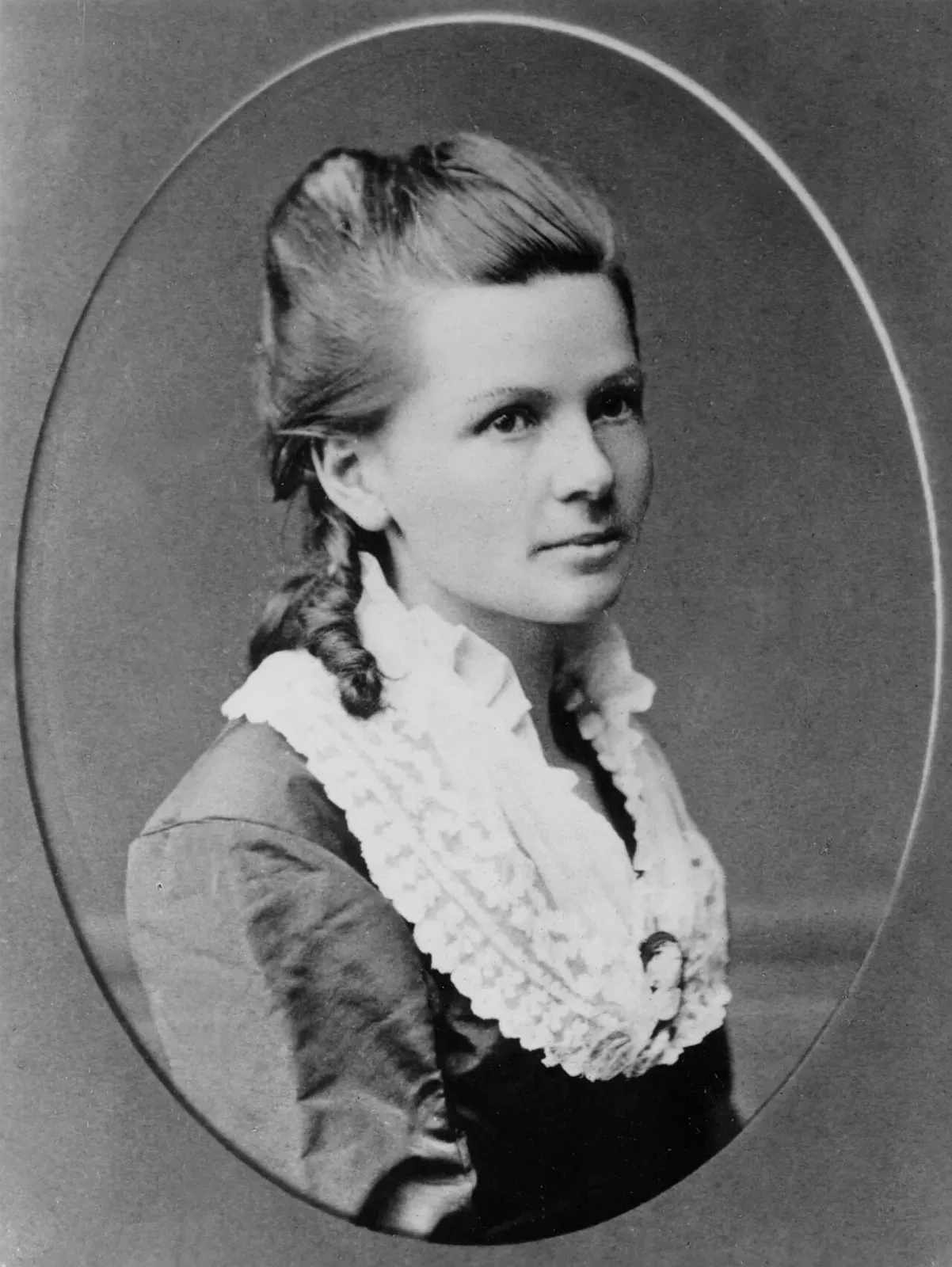
On the morning of 5 August 1888, while Benz was still asleep, Bertha Benz loaded her two teenage sons into the Motorwagen and drove roughly 104 kilometres from Mannheim to Pforzheim - the longest journey ever completed by a motorised vehicle. She had told Karl nothing about it. The machine broke down repeatedly. She cleaned a blocked fuel pipe with her hat pin. She insulated a fraying wire with her garter. On a long uphill section, her sons got out and pushed. In Wiesloch, she stopped at a pharmacy - the first filling station in history was a pharmacist’s counter - and bought ligroin to refuel. She arrived in Pforzheim that evening and sent Karl a telegram.
What Bertha had done was not, strictly speaking, an engineering demonstration. It was a marketing exercise. She proved that the car could travel further than the road outside the factory. She had also identified every mechanical weakness in the design - the inadequate brakes, the difficulty on gradients - and reported them back. Benz added a gear for climbing hills. The route she had driven became a formal automobile road. Her journey was the first real test of the automobile under practical conditions, and it was the event that shifted public perception from scepticism to possibility.
Daimler and Benz eventually merged their companies in 1926, forming what became Mercedes-Benz. The Patent-Motorwagen is the ancestor of roughly 1.5 billion vehicles currently in operation around the world. The patent itself - No. 37435, a single sheet with three schematic drawings - sits in the German Patent and Trade Mark Office archives. It is sometimes called the birth certificate of the automobile, which is accurate enough, if you remember that like most birth certificates, it records a beginning and says almost nothing about what that beginning would eventually become.