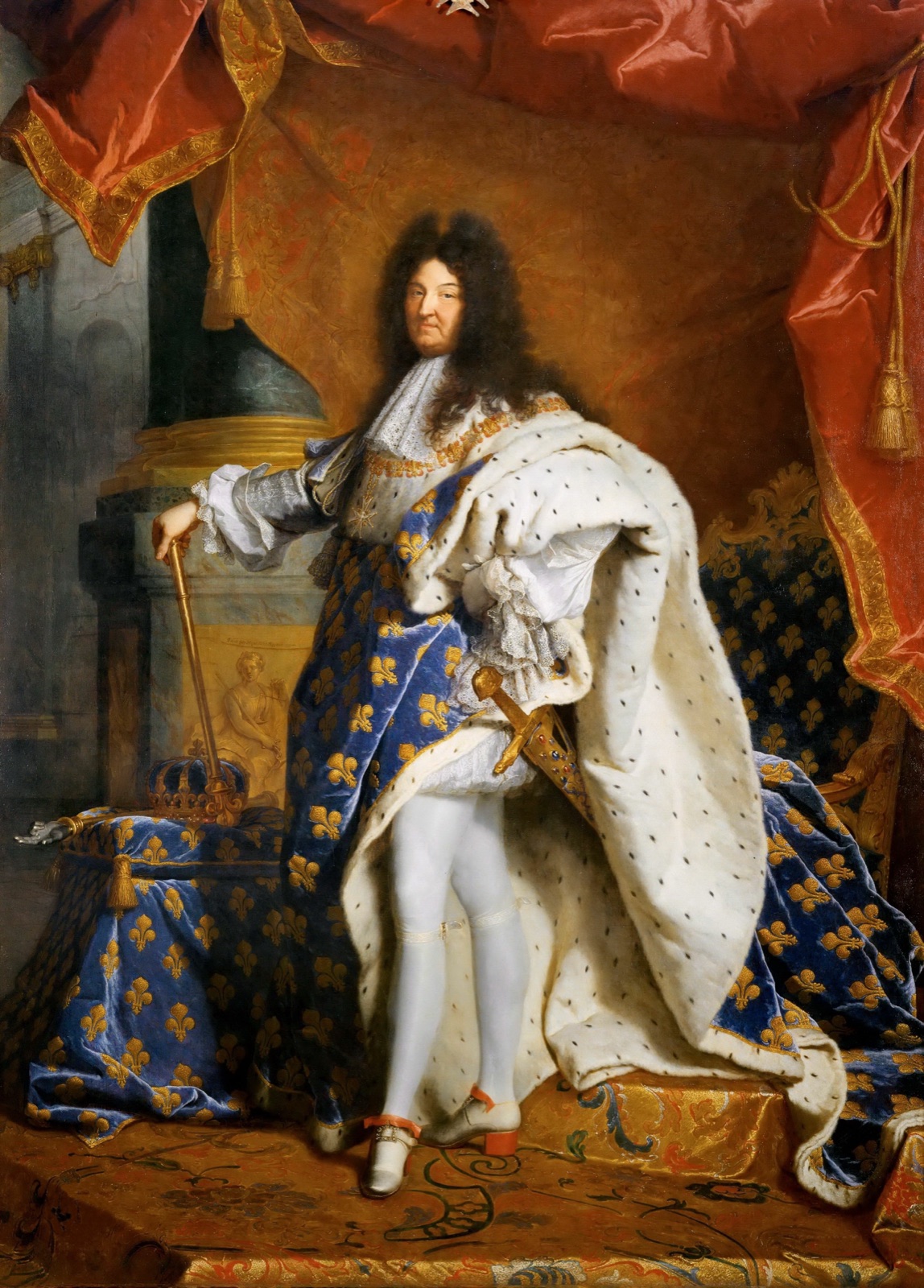
On the night of 9 February 1651, a mob of Parisians broke into the royal palace and demanded to see their twelve-year-old king. Louis, forewarned, was feigning sleep. The crowd filed past his bed, gazed at him, and quietly left. Anne of Austria and Cardinal Mazarin had put him through this performance, hoping it would satisfy the crowd and avoid a confrontation. It worked. But it also left a mark. The boy king who had lain still while strangers filed through his bedchamber would spend the next thirty years building a place where no such scene would ever be possible again.
The Fronde - the series of noble and parliamentary rebellions that convulsed France between 1648 and 1653 - taught Louis several things about power. Paris was unreliable. The high aristocracy were dangerous when left to their own devices and provincial estates. And a king who ruled from the traditional palaces of the capital was a king within reach of the mob, the parlement, and the princes of the blood who had so recently made his childhood a sequence of humiliations and hasty flights. When Mazarin died in 1661 and Louis took personal control of the government, one of his first decisions was to transform his father’s modest hunting lodge at Versailles into something large enough to absorb the entire court of France. The project took twenty years.
The scale was not aesthetic indulgence. The palace that emerged had 2,143 windows, 1,252 chimneys, and a garden façade stretching 402 metres. The Hall of Mirrors, completed in 1684, ran 73 metres along the western front, its 578 mirrors designed to throw back the light from 17 arched windows overlooking the gardens - and to tell every foreign ambassador who walked its length that France was the leading power in Europe and its king lived accordingly. The court architect Jules Hardouin-Mansart was still adding wings as late as 1689. The construction cost was staggering and never officially tallied, in part because Louis ordered the accounts destroyed. When the Nine Years’ War began in 1688, Louis melted down the eight-foot silver throne to help pay for it.
But the political logic was more important than the budget. Louis did not build Versailles to live in luxury. He built it to keep the French nobility where he could see them. The key mechanism was simple: the pensions, appointments, and royal favours that a nobleman of the seventeenth century needed to maintain his status were available only to those who attended the king at court. Absence from Versailles meant absence from the distribution of offices, military commands, and money. An elaborate ritual around the king’s daily existence - the lever, the formal ceremony of the king rising from bed, the coucher of him retiring, the ceremonial dinners at which Louis sat alone at a table while courtiers watched him eat - turned proximity to the monarch into the currency of power. Louis had an excellent memory, as contemporaries noted, and could tell at a glance who had been present and who had not. The great nobles who had led armies against his regency were now competing for the honour of handing him his shirt in the morning.
The historian Philip Mansel described the result as “an irresistible combination of marriage market, employment agency and entertainment capital of aristocratic Europe, boasting the best theatre, opera, music, gambling, sex and, most important, hunting.” This is accurate as far as it goes, but it undersells the coercive element. A nobleman who spent his time at Versailles had no time for his regional estates, no occasion to cultivate local loyalty, no space to build the independent military power that the Fronde had demonstrated was possible. Louis also prohibited the maintenance of private armies. The old military aristocracy - the noblesse d’épée, the nobility of the sword - became ceremonial courtiers. In their place, Louis elevated commoners and the more recently ennobled bureaucratic class, men who could be dismissed, who owed their position entirely to royal favour, and who had no ancient lineage to fall back on if that favour was withdrawn. It was not the palace that tamed the French aristocracy. It was the dependency the palace created.
On 6 May 1682, the court moved permanently to Versailles. By 1687, it was evident to every observer that the palace was the effective capital of France. The government, the ministers, the ambassadors, the grandees of the realm - all of them were 18 kilometres west of Paris, in a building designed specifically to concentrate power around a single person and to make that concentration look like the natural order of things. Louis had solved his Paris problem. He would not return to the city after 1682.
The irony is that he solved it too well. His successors inherited Versailles along with its rituals, its costs, its self-enclosed world. By the 1780s, Louis XVI and Marie Antoinette were living in the same palace, running the same ceremonies, at a distance from Paris that made them increasingly remote from the country they governed. When the Women’s March of October 1789 needed to find the king, the crowd did not go to Paris. It marched to Versailles - because that is where Louis XIV had put him, and every king since. The palace that had been built to protect the monarchy from Paris eventually delivered the monarchy directly into the hands of whoever was angry enough to make the walk. Louis XIV had built the most beautiful cage in Europe. He just didn’t anticipate that his great-great-grandson would be the one sitting in it.