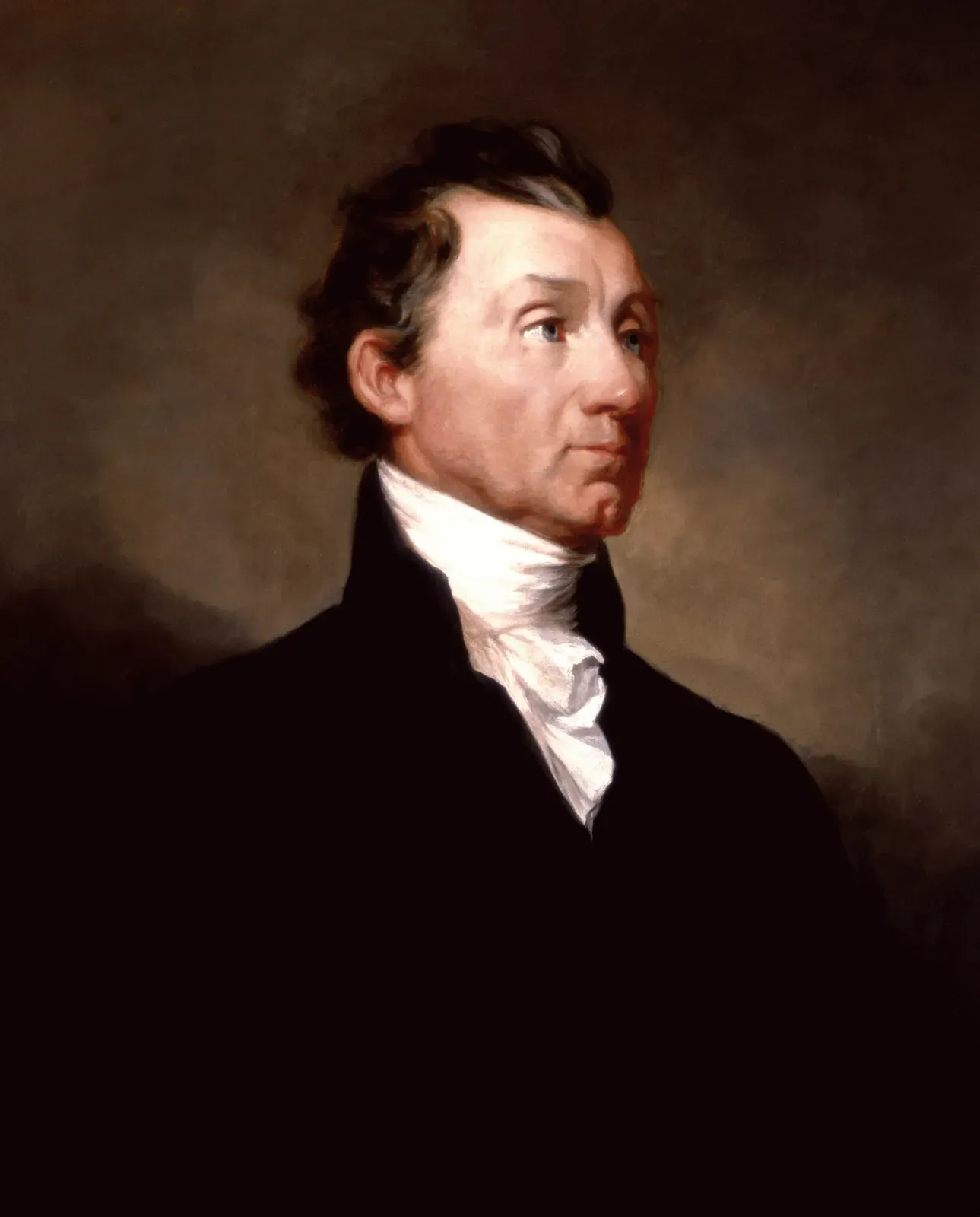
On 30 April 1803, at the Hôtel Tubeuf in Paris, Robert Livingston and James Monroe signed a treaty purchasing 828,000 square miles of North America from France for $15 million. That works out to less than three cents per acre. Jefferson had sent them to buy New Orleans. They came back with what is now fifteen US states.
The story of how this happened begins not in Washington or Paris but in Saint-Domingue — the French colony that is today Haiti. Napoleon had recovered Louisiana from Spain in 1800 as part of his plan to rebuild a French empire in the Western Hemisphere, with the Caribbean sugar colonies as its commercial engine and Louisiana as their breadbasket. The plan made strategic sense. The execution did not. In December 1801, he dispatched General Charles Leclerc — his brother-in-law — with 40,000 troops to suppress the slave revolt that had made Saint-Domingue effectively autonomous under Toussaint Louverture. The expedition never recovered. Yellow fever killed Leclerc in November 1802. By early 1803, the French army in Saint-Domingue had effectively ceased to exist, with more than two-thirds of its troops dead. Without the sugar revenues, Louisiana was strategically worthless. With war against Britain looming again, it was also indefensible. On 11 April 1803, Napoleon told his Treasury Minister François Barbé-Marbois he was willing to sell the entire territory. The following day, Barbé-Marbois made the offer to Livingston: all of Louisiana for $15 million. Livingston had authorisation to spend up to $10 million on New Orleans alone.
Jefferson had dispatched Monroe to Paris in the spring of 1803 with instructions to buy New Orleans, or at least the right of deposit there — the ability of American merchants to store goods for export through the port. This mattered because the entire agricultural output of the American interior west of the Appalachians flowed down the Mississippi to the Gulf of Mexico. Whoever controlled New Orleans controlled the economic artery of a growing nation. Jefferson had authorised up to $10 million for the city and its environs. When Barbé-Marbois offered the whole territory for $15 million — an area larger than the existing United States — Livingston and Monroe agreed without waiting for instructions from Washington. They were right not to wait. The offer was not going to improve.
The money, however, presented a problem. The US Treasury had around $5.86 million in specie on hand. Jefferson borrowed the rest from British and Dutch banks — specifically Barings of London and Hope & Co. of Amsterdam — at six per cent annual interest. The final bonds were paid off in 1823. With interest, the Louisiana Purchase cost the United States $23,313,567.73. Still cheap. Louisiana alone generated more than that in federal revenue within a generation.
Jefferson was also aware that he might not have the legal authority to do any of this. He was a strict constructionist — someone who believed the federal government could do only what the Constitution explicitly permitted, which the acquisition of foreign territory by treaty was arguably not. He drafted a constitutional amendment. His cabinet talked him out of it. Secretary of State Madison, who had helped write the Constitution, told him the treaty power was sufficient. Jefferson ultimately concluded that the deal was so obviously good for the country that worrying too much about the constitutional fine print was the wrong kind of rigour. Henry Adams, writing about it decades later, was less charitable: he called the purchase “trebly invalid” — possibly French, possibly still Spanish, definitely sold without the consent of any French legislative body. Valid or not, the Senate ratified it 24 to 7 in October 1803, the House authorised the funding, and by December the flags had been raised in New Orleans.
The territory the United States acquired was not, in any meaningful sense, France’s to sell. France controlled a handful of settlements along the Mississippi. The rest was occupied by millions of Native Americans who had not been consulted and whose lands the United States was, in Felix Cohen’s later formulation, acquiring the “preemptive right” to obtain by treaty or conquest. The $15 million paid to Napoleon was approximately 3.5 per cent of what the US government would ultimately pay, across two centuries of treaties and legal settlements, for the same land. The price was low because most of the work of actual acquisition had not yet been done.
What the purchase did accomplish was remove France from the continent entirely and establish that the United States, not any European power, would be the entity doing the acquiring. Jefferson immediately sent out four expeditions to map and chart the territory. The most famous of them — Lewis and Clark, who set out in May 1804 — reached the Pacific in November 1805. The geography they documented made plain the scale of what had changed hands: a drainage basin stretching from the Gulf of Mexico to Rupert’s Land, from the Mississippi to the Rockies, containing more arable and navigable land than all of western Europe.
The final detail belongs to the calendar. Nine years after the treaty was signed — on 30 April 1812, the same date — the Territory of Orleans, the southernmost slice of what had been purchased, entered the Union as the state of Louisiana: the eighteenth state, and the first carved from the purchase. It took its name from the old French colony, kept its French legal traditions (the Napoleonic Code, not English common law, is still the basis of Louisiana’s civil law), and carried into American statehood the mixed population of French, Spanish, African, and Creole inhabitants who had been living there when the flags changed hands. They had been transferred, by Barbé-Marbois’s offer and Monroe’s acceptance, from French sovereignty to American sovereignty without anyone asking their opinion either.
Livingston said, after signing the treaty, “We have lived long, but this is the noblest work of our whole lives.” He was not wrong about the scale. Three cents an acre for the interior of a continent is, by any measure, the transaction that made the United States what it became. The irony is that it happened because a slave revolt destroyed Napoleon’s American strategy, was financed by British bankers whose government had no interest in seeing France control New Orleans, and was authorised by a president who believed, in theory, that he did not have the power to do it. The country doubled in size in spite of itself.