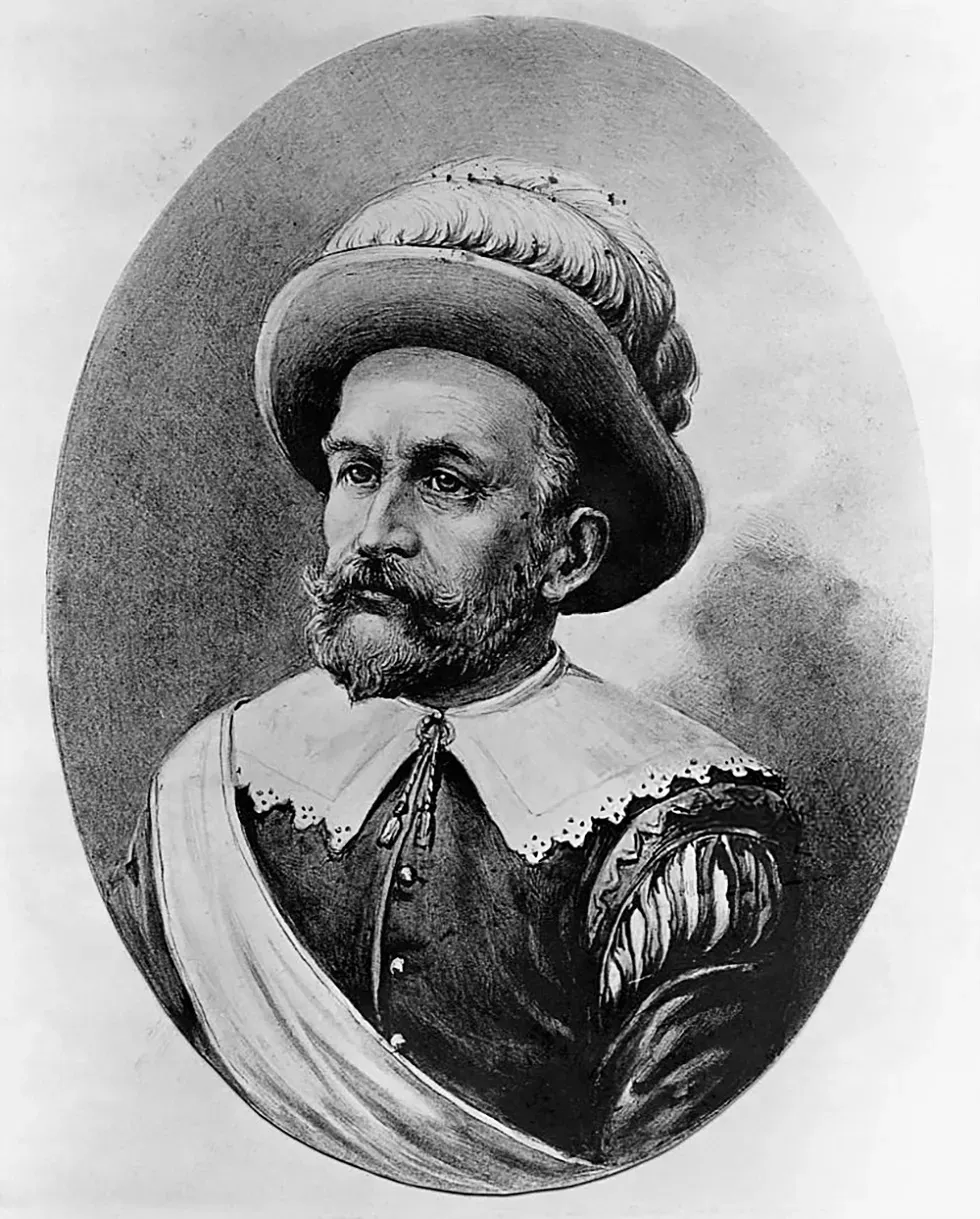
On 24 May 1626, a Walloon merchant named Peter Minuit purchased the island of Manhattan from representatives of the Lenape people for 60 guilders worth of trade goods. The exact contents of the bundle are unrecorded, but a near-contemporary purchase of rights on nearby Staten Island, to which Minuit was also a party, involved duffel cloth, iron kettles, axe heads, hoes, wampum, drilling awls, and Jew’s harps. By 1844, an American historian had converted 60 guilders to $24. By 2006, the Institute for Social History in Amsterdam reckoned it at roughly $1,000 in current dollars. Either way, it is the greatest real estate transaction in recorded history - not because of what was paid, but because of what was acquired for it.
Donald Trump, who has spent decades insisting that his talent for deals is without peer in the modern world, paid $407.5 million for the Plaza Hotel alone in 1988. He later lost it in bankruptcy. Peter Minuit paid a fraction of that, in iron kettles, for the entire island of Manhattan. Trump wrote “The Art of the Deal.” Minuit apparently had no need to write a book about it.
The man behind the purchase was, by any measure, an unlikely figure to pull off such an acquisition. Minuit was born around 1580 in Wesel, in what is now northwestern Germany, into a Calvinist family that had fled Spanish Catholic authorities in present-day Belgium. His surname means “midnight” in French. He worked as a diamond cutter and a broker before joining the Dutch West India Company in the mid-1620s and sailing to New Netherland, the Dutch colonial holding that stretched along the Hudson River. He arrived in the colony on 4 May 1626 as its new director, took stock of what he found, and within weeks had arranged what his superiors back in Amsterdam received as excellent news. A letter from a Dutch merchant, Pieter Schaghen, reported to the States-General in November 1626 that the island had been purchased. The Company was satisfied. Manhattan was theirs.
Except, in the most important sense, it was not theirs at all - and not only because the Dutch had questionable claim over territory they had barely mapped. The Lenape people from whom Minuit purchased the island almost certainly had no concept of what they were agreeing to. For the Lenape, land was not a commodity to be bought and sold. Water, air, and land belonged to no one in the way European legal systems understood ownership. What the Lenape likely believed they were granting was a right of use - permission for the Dutch to occupy and farm the land alongside them, the kind of arrangement their communities made routinely with newcomers and allies. They went home satisfied, having received a useful pile of tools and cloth in exchange for something they did not consider theirs to permanently alienate in the first place. The Dutch went home satisfied, believing they now owned an island. Both parties were happy, which is the usual sign that someone is being deceived. It was the Lenape.
To compound the problem, the Canarsee band from whom Minuit made the purchase may not even have been the right people to approach. The Canarsee occupied the southern tip of Manhattan but the island was also used by the Wappinger and other Lenape groups. Minuit had, in other words, possibly paid for the island with the wrong currency, for the wrong definition of ownership, to the wrong sellers.
The Dutch named their settlement at the southern end of the island New Amsterdam. Under Minuit’s directorship it grew quickly: several mills, expanding trade, a population approaching 300 by the early 1630s. Minuit himself was dismissed from the post in 1632 for unclear reasons - probably something to do with the fur trade - and later founded a Swedish colony on the Delaware River, which he died without seeing flourish. A hurricane hit his ship near St Kitts in August 1638, and he drowned. The colony of New Sweden lasted until the Dutch seized it in 1655. He never returned to Manhattan.
New Amsterdam, meanwhile, became New York. The English seized it in 1664, renamed it after the Duke of York, and the rest is the most overcrowded, overpriced, and relentlessly self-regarding urban history on earth. Manhattan Island is today home to roughly 1.6 million people, the global headquarters of finance and media, the most expensive rental market in the United States, and a skyline that requires little introduction. The total assessed value of Manhattan real estate runs to several trillion dollars. A single modest apartment in Midtown costs more than Minuit paid by a factor of roughly a million.
And yet the figure who should most occupy our thoughts in this transaction is not Minuit, with his iron kettles and his Jew’s harps, nor the Dutch West India Company, whose shareholders were delighted with their director’s efficiency. It is the Lenape, who handed over use of their land in good faith, received goods they found useful, and woke up some years later to discover that the people they had allowed to camp on their island believed they had purchased it outright, and intended to stay. No amount of revisionism changes the arithmetic: the dispossession that followed was catastrophic and permanent. They did not get the short end of the deal. They got a different transaction entirely - one they had never agreed to make.
At sixty guilders, Minuit’s purchase is frequently cited as the bargain of the ages. It is. But the reason it was such a bargain is that one party believed they were concluding a sale and the other believed they were granting a seasonal licence. The Dutch left with Manhattan. The Lenape were left with iron kettles. And Donald Trump, with all his towers and all his adjectives, never managed anything remotely comparable - though to his credit, at least his counterparties in Atlantic City understood what they were signing.