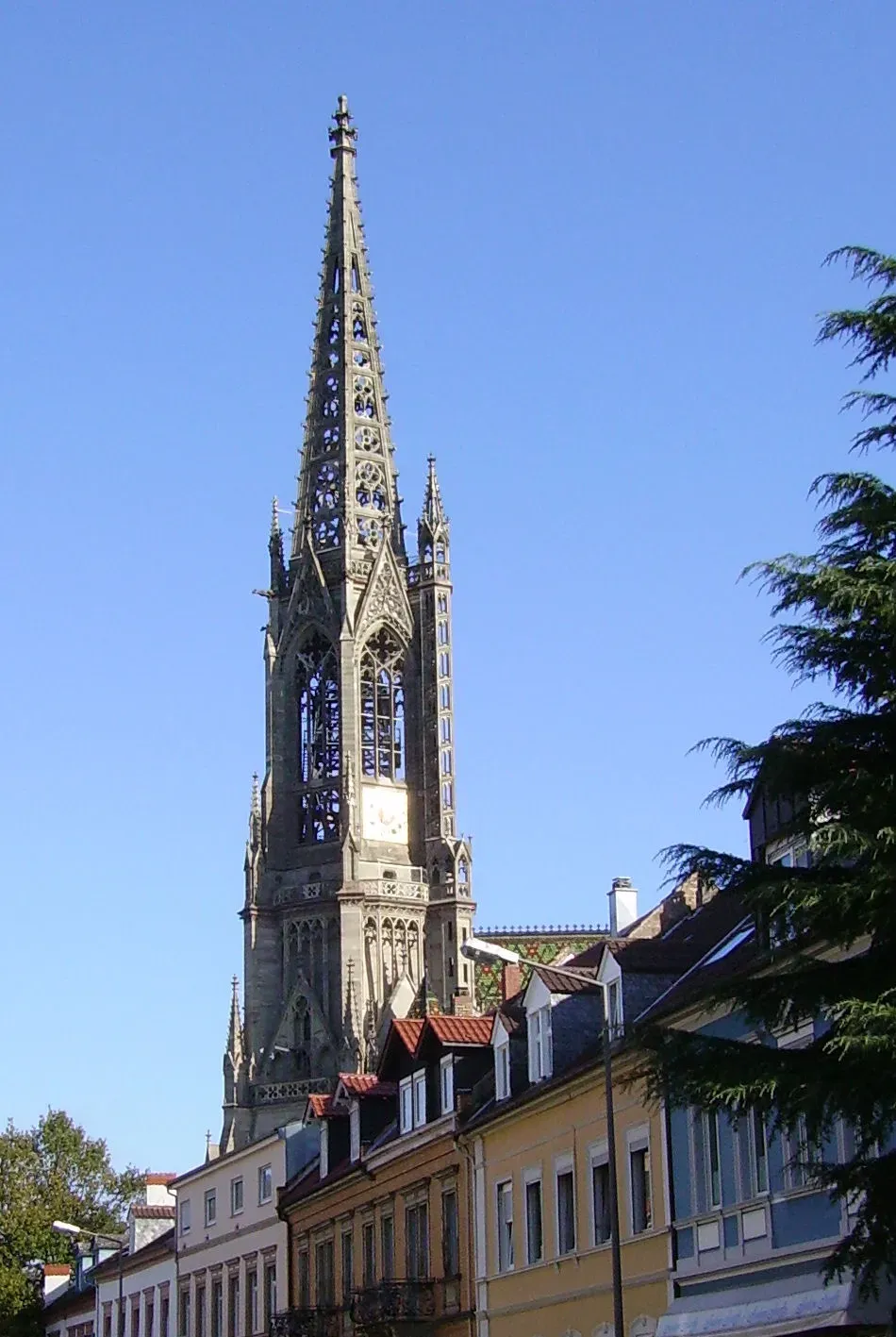
The word “Protestant” did not come from a sermon. It did not emerge from a theological disputation, or from Luther’s ninety-five theses nailed to a church door in Wittenberg in 1517, or from any single act of religious boldness that might suggest a conscious act of founding. It came from a legal document - a protestatio - filed at an imperial assembly in the German city of Speyer on 25 April 1529, six days after that assembly voted to ban the Reformation entirely. The document was a formal objection entered by a minority against a majority decision. Its authors called themselves protesters. Their opponents started calling them Protestants. The term has stuck for nearly five hundred years.
To understand why that vote happened requires going back three years. At the first Diet of Speyer in 1526, the assembled princes and city delegates had agreed to a formula that gave German rulers latitude to manage their own religious affairs until a General Council could settle the theology. In practice this meant the Edict of Worms - which had outlawed Luther in 1521 and prohibited possession of his writings - was suspended rather than enforced. The Reformation had used those three years well. Lutheran churches, schools, and civic institutions had spread across dozens of German territories and cities. By 1529, the question of whether to tolerate the new movement was no longer theoretical. Tolerance had already happened.
Charles V, who had been absent from Germany managing his Italian wars against France, returned to the issue in a stronger position. His forces had shattered the French army at Pavia in 1525 and sacked Rome in 1527. The Pope, previously a political obstacle, was now effectively under imperial control. Charles sent instructions to his younger brother Ferdinand, who was presiding over the Diet in his stead, to take a conciliatory line. Those instructions did not arrive in time. Ferdinand read his own, far harsher proposals in the emperor’s name at the opening of proceedings: the 1526 recess was invalid, the Edict of Worms would be enforced, and no further religious innovation was to be permitted. The Zwinglians and Anabaptists were excluded even from the tolerance the Lutherans had previously enjoyed; the Anabaptists, specifically, were to be punished by death.
On 19 April, the Diet adopted its recess along these lines. The Catholic majority had the votes. The Lutheran minority - Elector John of Saxony, Margrave George of Brandenburg, Landgrave Philip of Hesse, Prince Wolfgang of Anhalt, and the dukes of Brunswick-Luneburg, along with the delegates of fourteen imperial cities including Strasbourg - refused to accept it. Their objection was not merely practical but constitutional: a majority vote, they argued, could not settle matters of conscience and faith. They had accepted the 1526 arrangement in good faith. To reverse it by majority decision without a general council was contrary to the word of God and to the rights agreed three years earlier.
The protestatio they filed on April 25 was a careful legal instrument, appealing to the emperor himself, to a future general council, and to “impartial Christian judges.” Their motto, taken from the Elector of Saxony, was: “The Word of God abideth forever.” What they had set in motion, without quite intending to, was the conversion of a religious movement into a political identity. Before Speyer, Lutheran princes and cities were reforming their churches. After Speyer, they were a named faction within the empire, defined by their refusal to accept the majority’s authority over matters of faith. The Reformation had become a constitutional problem.
Charles spent the following decade unable to resolve it. The Ottoman threat absorbed much of his attention: Suleiman had besieged Vienna in September 1529, the same year as the Diet, and the Protestant princes were essential to any serious imperial military response. In 1531 the Lutheran states formalised their position by founding the Schmalkaldic League, a defensive military alliance. Charles needed that alliance in working order. He could not afford to smash it.
On 19 April 1539 - exactly ten years after the Diet concluded its recess - Charles signed the Treaty of Frankfurt with the Schmalkaldic League. The Lutherans were represented by Philip Melanchthon. The terms were deliberately modest: the emperor agreed not to take violent action against the Protestant princes for fifteen months beginning on May 1, and both sides would use the time to seek a theological resolution through dialogue. The Schmalkaldic League gave up its French alliance in exchange for the breathing room. Neither side believed the dialogue would produce an agreement. Both sides needed the pause.
Charles did eventually move. The Schmalkaldic War of 1546 to 1547 ended with his most complete military victory - the capture of Philip of Hesse and Elector John Frederick of Saxony at the Battle of Mühlberg. He imposed the Augsburg Interim, a compromise settlement that restored much of Catholic practice while conceding clerical marriage and communion in both kinds to the Lutherans. The Protestant territories rejected it, or accepted it formally and ignored it in practice. The Peace of Passau in 1552 forced him to concede the main point. The Peace of Augsburg in 1555 formally established the principle that each prince would determine the religion of his own territory - cuius regio, eius religio, whose realm, his religion. It was the legal settlement of what the protestatio of 1529 had begun.
Charles abdicated in 1556, the year after Augsburg, handing the Empire to his brother and Spain to his son. He had spent thirty-seven years as Holy Roman Emperor attempting, among other things, to hold Western Christianity together against the fracture that six princes and fourteen cities had formalised at Speyer. He could not. The word those princes attached to themselves when they filed their legal objection outlasted every military and diplomatic effort to make it unnecessary. A protestatio at an imperial assembly became, in time, a confession of faith for roughly a billion people. The archives at Speyer contain the original document. The name it created is rather more widely distributed.