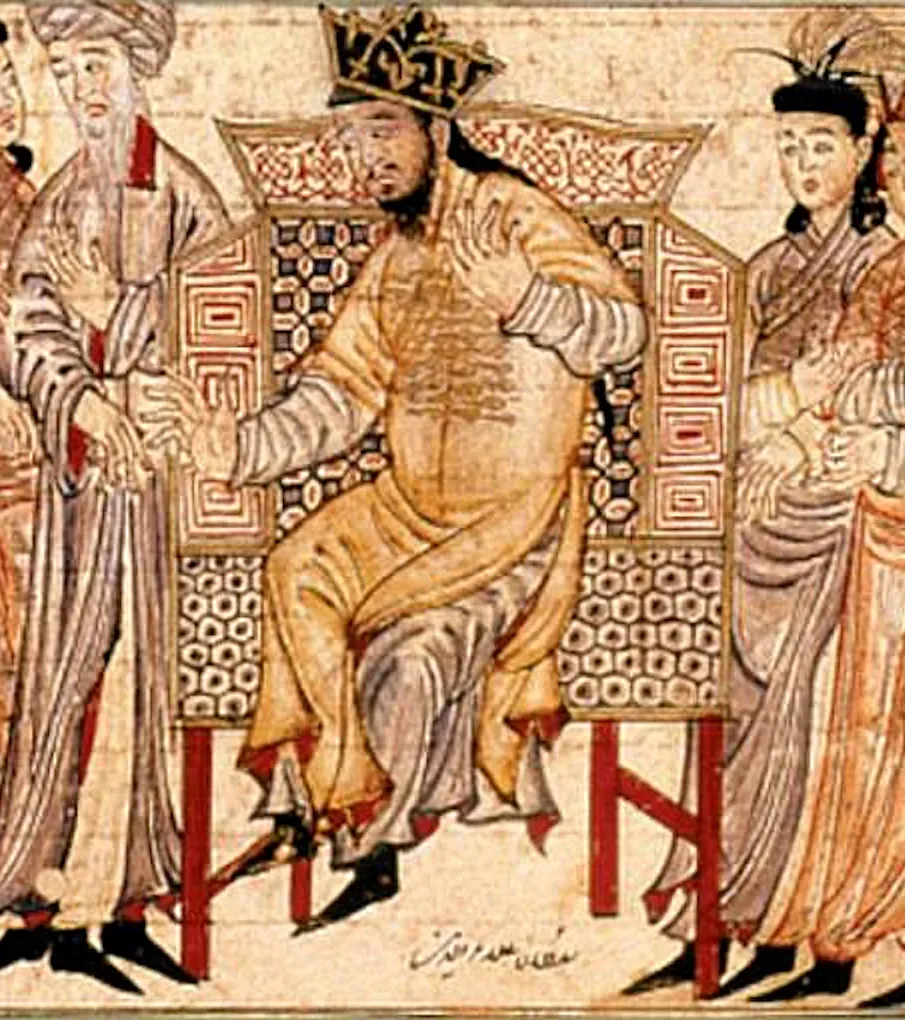
Let’s be honest: when politicians promise to “control prices” today, we roll our eyes. We’ve seen the empty shelves, the black markets, the inevitable collapse. So why does the story of Alauddin Khalji—the Delhi Sultan who, in the early 1300s, fixed the price of grain, cloth, slaves, and even sesame oil—still demand our attention? Because his system didn’t fail. For two decades, it worked like a clock. And that’s the uncomfortable part.
Alauddin didn’t wake up one morning with a sudden passion for consumer protection. His court poet Amir Khusrau claimed the Sultan acted out of “great regard for general prosperity,” but the chronicler Ziauddin Barani, writing in an uncompromising style, cuts through the propaganda. Alauddin needed a massive standing army to repel Mongol invasions, and he couldn’t afford to pay market rates. So he did the math: if he could slash the cost of living, he could slash wages. The result was a command economy so thorough it would ba a Soviel Gosplan apparatchik’s wet dream.
Here’s how it worked. The Sultan established four tiers of regulated markets in Delhi: a central grain exchange, a market for manufactured goods called the Sera-i Adl, dedicated markets for slaves (yes, he was proto-socialist, but definitely not abolisionist) and animals, and neighbourhood shops for daily essentials. Every commodity had a state-mandated price. Wheat: 7.5 jitals per mann. Barley: 4. Rice: 5. Not a copper more. To enforce this, Alauddin appointed market controllers, deployed spies, and instituted a triple-reporting system where the superintendent, intelligence officers, and secret informants all filed daily updates. Any discrepancy meant punishment. Merchants couldn’t just show up and sell; they had to register, submit to inspections, and accept that their profit margins were now a matter of state security.
The enforcement was brutal because the stakes were existential. Hoarders were jailed. Transporters were forced to relocate with their families along the Yamuna to guarantee grain flow. Shopkeepers caught using false weights didn’t just get fined. Barani records that the minister Yaqub Nazir would “carve out double the due weight of flesh” from their bodies. Shakespear had some real life inspiration for his “Merchant of Venice” sub-plot, its seems. This wasn’t bureaucracy. It was terror, calibrated to keep bread cheap and armies loyal. And it extended beyond food. The price of horses, textiles, sugar, even the wages of domestic servants — all locked in. The state didn’t just watch the market; it became the market.
And yes, it delivered. During droughts, when other kingdoms saw famine and revolt, Delhi’s granaries held. Soldiers accepted low cash wages because their cost of living was artificially suppressed. The Sultan could field one of the largest cavalry forces in the region and still keep the treasury solvent. Even contemporary observers noted that entertainment flourished and “even beggars could afford cotton-stuffed garments.” By the metric of state survival, Alauddin’s reforms were a triumph. For the first time in the region, a ruler had turned the entire economy into a weapon and wielded it without flinching.
But let’s not romanticise ruthlessness. This system worked only because Alauddin was willing to break every norm of medieval governance. He imprisoned merchants, overrode traditional brokers, and treated the entire economy as an extension of military logistics. It was effective precisely because it was unsustainable. The moment he died, his son Qutbuddin Mubarak Shah scrapped the controls. Naturally, the prices promptly soared. The apparatus of surveillance collapsed. Merchants who had been cowed for years suddenly tested the boundaries. What looked like a miracle of administration turned out to be a personality cult with scribes and an army of enforcers.
So what’s the lesson? Not that price controls are secretly brilliant. The lesson is that Alauddin Khalji understood a truth modern policymakers often forget: you can’t regulate prices without regulating power. His system didn’t succeed because it was fair or efficient. It succeeded because the Sultan had the will to punish anyone who tested its limits. In an age of algorithmic markets and global supply chains, that kind of raw, centralised coercion isn’t just impractical, it’s unthinkable. And perhaps that’s for the best.
Still, the next time someone promises to “fix” prices with a stroke of a pen, remember the Sultan of Delhi. He actually pulled it off. And the cost was everything that makes a free society worth living in. Alauddin’s genius wasn’t economic, it was psychological. He understood that control isn’t about setting the right number on a tag. It’s about making sure no one dares to change it. That’s a lesson that echoes far beyond the fourteenth century. The question isn’t whether we could replicate his system. It’s whether we’d recognise the price we’d pay for trying.