At least two works of Indian fiction, separated by nearly two decades, share the same subplot: Pakistani intelligence counterfeiting Indian banknotes. In both cases the mechanism is the same, the denominations are the same, and the villain is the same. This is either a coincidence or it isn’t. I suspect the latter.
The first is Sacred Games, Vikram Chandra’s 2006 novel - a sprawling, multi-layered crime epic set largely in Mumbai. Among its many threads is a counterfeiting operation linked to Pakistan’s Inter-Services Intelligence: forged ₹500 and ₹1,000 notes smuggled into India to fund clandestine terrorist operations and destabilise the economy. The book was later adapted into a Netflix television series, which brought the same subplot to a much wider audience. The second is Dhurandhar, a 2025 Indian blockbuster - a thriller incorporating a similar device. Pallets of counterfeit cash, ISI involvement, the same denominations. The film is more nakedly propagandistic than the novel: state messaging dressed in the clothes of an action movie, the kind of production where every plot point feels approved, if not scripted, by someone in government. Sacred Games is subtler, but the device is the same.
The core premise in both works is identical. The ISI obtains either the correct paper stock or the actual printing plates for Indian ₹500 and ₹1,000 notes - the details vary - and uses them to produce counterfeits at industrial scale. The fake notes enter India through criminal networks, funding terrorist operations while simultaneously undermining confidence in the currency. It is a neat device: espionage, economic warfare, and organised crime wrapped into a single actionable subplot. Neat enough, in fact, that its recurrence across unrelated works of fiction starts to feel less like creative coincidence and more like something else entirely.
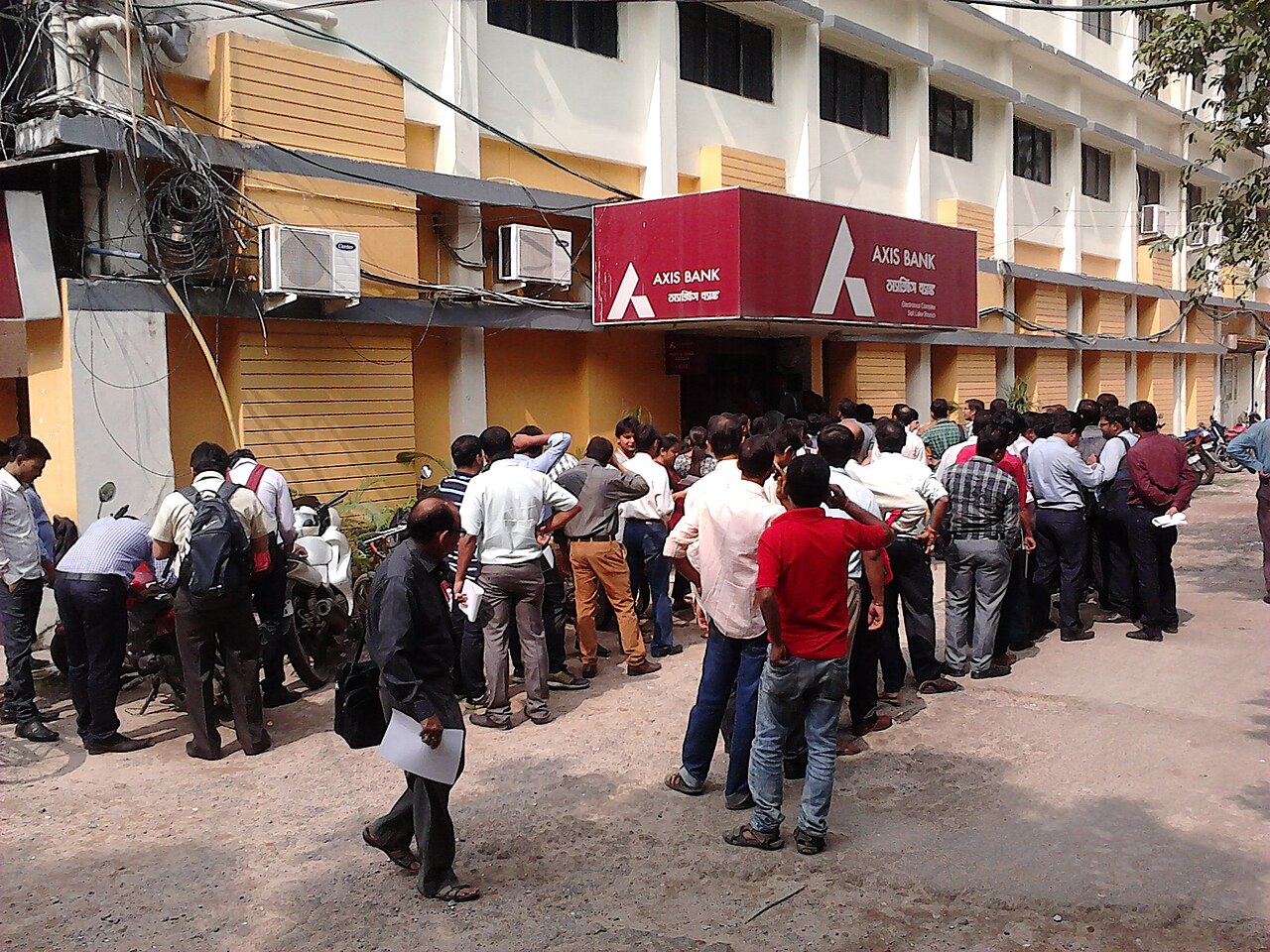
In real life, on 8 November 2016, the government of India announced the demonetisation of all ₹500 and ₹1,000 banknotes of the Mahatma Gandhi Series. The notes - which together accounted for roughly 86 per cent of the currency in circulation - ceased to be legal tender almost overnight. Citizens were given a brief window to exchange their old notes for newly designed replacements. The queues at banks lasted weeks. The official justifications shifted as time went on: it would eliminate black money, it would cripple terrorism financing, it would drag India’s cash economy into the digital age. But the one explanation that recurred most consistently was the claim that Pakistan had been flooding India with high-quality counterfeits of precisely these two denominations. This is where the fiction and the policy begin to rhyme in ways that invite suspicion.
I see three possibilities, not necessarily mutually exclusive. The first is that there genuinely was (still is? Any ISI readers here?) a large-scale counterfeiting operation - run from Pakistan, or perhaps from elsewhere - that had flooded the Indian market with fakes of sufficient quality to be undetectable in ordinary commerce. The government may have concluded that no enforcement effort could untangle the real from the forged, that the criminal and political networks distributing the counterfeits were too deeply embedded to dismantle by conventional means. In India, the boundary between organised crime and elected politics is thinner than in most democracies - a chief minister sheltering a smuggling ring is not a hypothetical but a recurring feature of Indian public life. This is especially true about the state of Uttar Pradesh - a territorry so large and populous, that it rivals many large countries. It is famous for corruption even among the otherwise not so squeacky clean Indian politicians. If the counterfeiting operation had that kind of protection, in UP or elsewhere, demonetisation - wiping the slate by invalidating every note in circulation - might have seemed like the only tool blunt enough to work.
The second possibility is simpler. The Pakistani counterfeit story is a general rumour, the kind that circulates in intelligence and journalism circles, plausible enough to be useful and unverifiable enough to be safe. Writers reach for it because it serves multiple purposes at once. It smears Pakistan, which always plays well with Indian audiences. It provides a tidy motivation for characters who need to move large amounts of cash for dramatic purposes. It is the kind of premise that feels true whether or not it is, and in commercial fiction that is usually enough. Two writers drawing on the same ambient material may indicate nothing more than two writers drawing on the same ambient material.
The third possibility is the most interesting. The 2016 demonetisation was undertaken for reasons the government preferred not to state plainly - perhaps to flush out undeclared wealth held by political opponents, perhaps to force a digital payment infrastructure that would increase state surveillance of transactions, perhaps for reasons that had nothing to do with counterfeiting at all. It needed a justification, however, and the Pakistani forgery narrative was embraced and encouraged after the fact as retroactive justification. Obviously, it was well known before the events of 2016, and might have been well established in certain parts of Indian society. Governments that wish to embed an explanation in public consciousness have tools more subtle than press conferences. Fiction is one of them. A good thriller that dramatises heartless ISI agents printing fake rupees does more to plant the idea than any white paper could, because it arrives as entertainment rather than argument. The audience absorbs the premise without examining it. If two major works of Indian fiction - one a prestige novel adapted for streaming, the other a blockbuster cinema release - both build their plots around the same intelligence claim, the explanation does not need to be stated by any official. It is already in the culture, already assumed, already part of what everybody knows.
I do not know which of these accounts is closest to the truth. Possibly all three contain some fraction of it. But the repeated use of this specific device - the same denominations, the same intelligence agency, the same mechanism - across works separated by years and aimed at different audiences feels too consistent to be mere creative coincidence. Someone, somewhere, wants this story told. The question is whether that someone is reality or the state.