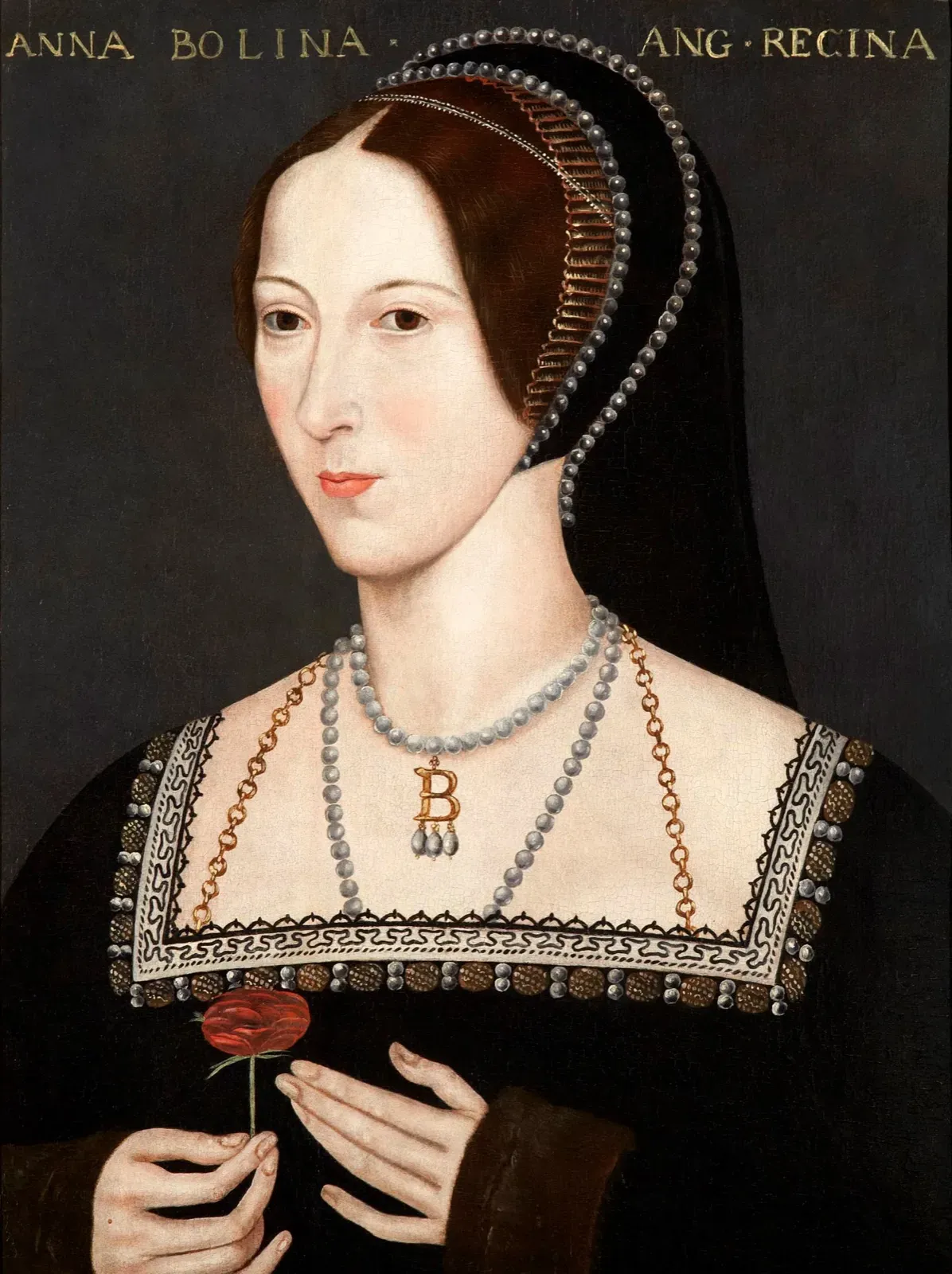
Henry VIII ordered a swordsman from Calais. The traditional English method of execution for nobility was beheading by axe, but he deemed it unsuitable for a queen - even one he was about to kill for adultery, treason, and incest. The swordsman was an expert. Anne Boleyn’s head came off in a single stroke on the morning of 19 May 1536, on Tower Green, in front of a small crowd of witnesses. She had been queen for three years. She had been married for slightly longer. On 30 May, eleven days after her death, Henry married Jane Seymour at York Place.
The charges were fabricated. Modern historians do not seriously dispute this. Anne was accused of adultery with five men, including her own brother George, and of conspiring to murder the king. The evidence consisted of confessions extracted under torture, dates that placed Anne in locations she provably was not, and testimony from men who had every reason to tell Thomas Cromwell what he wanted to hear. Cromwell, Henry’s chief minister, orchestrated the case with the efficiency of a man who understood that a queen could be disposed of if enough men with titles signed the warrant. The jury that convicted her - including her uncle, the Duke of Norfolk, who presided - returned a unanimous guilty verdict. The outcome was never in doubt. Henry had decided Anne was expendable, and the machinery of Tudor justice followed orders.
To understand why he wanted her dead requires going back to 1527, when Henry first attempted to annul his marriage to Catherine of Aragon. Catherine had not produced a surviving male heir. Anne Boleyn, a lady-in-waiting, had caught the king’s attention. The Pope, Clement VII, refused the annulment - partly because Catherine’s nephew was Charles V, Holy Roman Emperor, who had recently sacked Rome and was not inclined to see his aunt discarded for political convenience. Henry spent six years attempting to negotiate, threaten, and bribe his way to a solution. When diplomacy failed, he broke with Rome entirely.
The Act of Supremacy, passed in 1534, made Henry Supreme Head of the Church of England. The Pope’s authority in England ceased to exist. Monasteries were dissolved. Church lands were seized. The entire constitutional relationship between England and the papacy was severed because Henry wanted to remarry. He married Anne in January 1533, four months before the Archbishop of Canterbury annulled his marriage to Catherine. Anne was already pregnant. She gave birth to a daughter - Elizabeth - in September 1533. Henry had broken England from the Catholic Church to marry a woman who failed to deliver the son he needed.
By 1536, Anne had suffered at least two miscarriages, the second in January of that year, reportedly of a male child. Jane Seymour, one of Anne’s ladies-in-waiting, was waiting. Cromwell saw an opportunity. Anne had made enemies: religious conservatives who wanted reconciliation with Rome, nobles who resented her rise, factions at court who had backed Catherine or who simply wanted Anne’s position for someone else. Cromwell built the case carefully - five men arrested in late April and early May, interrogations, a trial for Anne on 15 May before a panel of twenty-seven peers, a guilty verdict delivered the same day. Her marriage to Henry was annulled on 17 May, which rendered Elizabeth a bastard and also raised the awkward question of how Anne could have committed adultery in a marriage that had never legally existed. The logic did not matter. She was executed two days later.
What mattered was the precedent. Anne Boleyn was the first English queen consort to be publicly executed. Catherine Howard, Henry’s fifth wife, would follow her to the block in 1542, also on charges of adultery. The message was clear: queens were not untouchable. Marriage to the king was not security. The women Henry elevated could be removed as easily as they had been installed, and the men around him were willing to construct whatever legal fiction was required to make it happen.
The Reformation did not end with Anne’s death. It accelerated. Cromwell, who had orchestrated her downfall, continued the dissolution of the monasteries until his own execution in 1540 - convicted of treason and heresy on equally questionable grounds. The Church of England, which Henry had founded to marry Anne, became the permanent religious settlement of the country. Edward VI, Henry’s son by Jane Seymour, pushed England further toward Protestantism during his short reign. Mary I, Catherine of Aragon’s daughter, attempted to reverse it and burned enough Protestants to earn the name Bloody Mary. Elizabeth, Anne’s daughter, settled the matter.
Elizabeth I became queen in 1558 and ruled until 1603. She re-established the Church of England, defeated the Spanish Armada, presided over the early stages of England’s colonial expansion, and turned the throne her mother had died for into one of the most stable and culturally productive reigns in English history. The Elizabethan Religious Settlement of 1559 established a middle path between Catholic and Protestant extremes that defined English Christianity for centuries. Shakespeare wrote under Elizabeth. The country that had beheaded Anne Boleyn became, under her daughter, a Protestant power with global ambitions.
Anne’s marriage to Henry was annulled before her execution, which meant Elizabeth spent the first years of her life officially illegitimate. The Act of Succession of 1534 had declared her Henry’s heir; the Act of 1536, passed after Anne’s death, removed her from the line entirely. The Third Succession Act of 1543 restored her, placing her after Edward and Mary but ahead of any foreign claimant. Henry’s will confirmed the arrangement. When Mary died childless in 1558, Elizabeth inherited a kingdom that was financially strained, religiously divided, and surrounded by hostile Catholic powers. She ruled it for forty-five years, never married, and left no direct heir. The Tudor dynasty ended with her, but the settlement she built - religious, political, constitutional - lasted.
The execution of Anne Boleyn on 19 May 1536 was a political manoeuvre disguised as justice. It allowed Henry to remarry within days and cleared Anne’s enemies from a position they could no longer tolerate her holding. What it did not do was erase the consequences of the marriage itself. Henry had broken with Rome to marry Anne. That rupture was permanent. He had a daughter by her. That daughter became one of England’s greatest monarchs. The swordsman from Calais did his job cleanly, and the body was buried in an unmarked grave in the Chapel of St Peter ad Vincula within the Tower. The head came off. The Reformation stayed.