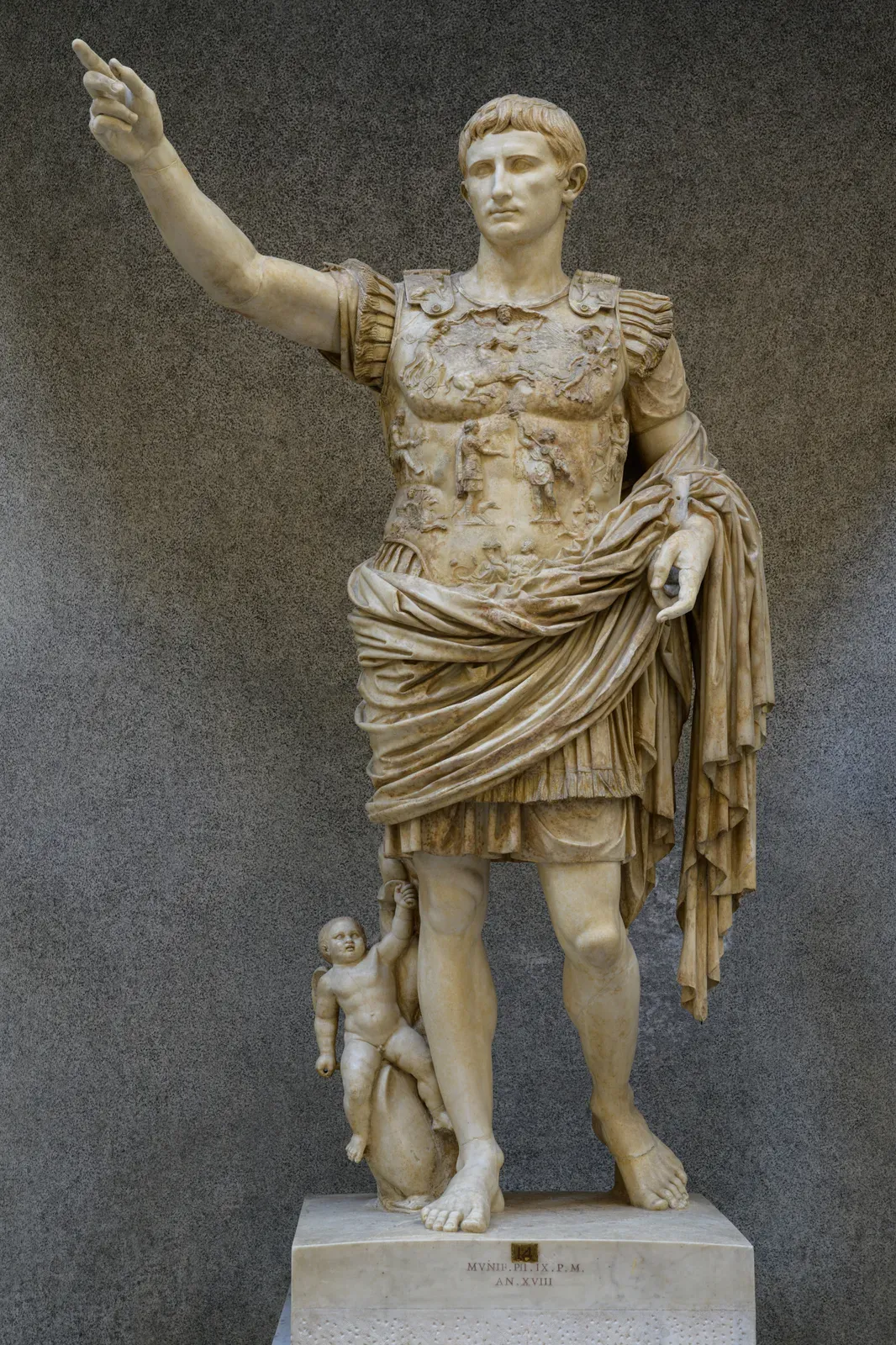
On 26 June AD 4, Gaius Julius Caesar Augustus - first citizen of Rome, architect of the Mediterranean world, and a man who had survived three decades of civil war, assassination plots, and his own failing constitution - formally adopted Tiberius Claudius Nero as his son and heir. Tiberius was forty-five years old, the son of Augustus’s wife Livia from her first marriage, and not, by any honest accounting, what Augustus had in mind.
The problem was that Augustus had no one else left.
Rome’s first emperor had approached succession the way that men who clawed their way to absolute power tend to approach it: obsessively, and without luck. His health had been a running concern since youth - he nearly died in 23 BC and was widely expected not to recover, which briefly plunged Rome into its first serious succession crisis - and the assumption was always that someone younger and capable would need to be ready. The candidates kept dying instead.
His nephew Marcellus, his first choice, died in 23 BC at around twenty years old, possibly from the same epidemic that had nearly killed Augustus. His general and son-in-law Marcus Agrippa, who married Augustus’s daughter Julia and produced five children with her, died in 12 BC. Of those five children, Augustus adopted the two eldest grandsons, Gaius and Lucius Caesar, as his direct heirs and began grooming them seriously for the role. Lucius died at Massalia in AD 2, aged eighteen. Gaius died in AD 4 from wounds sustained in Armenia, aged twenty-four. Within two years, both boys were gone.
The coincidence drew ancient suspicion, and has drawn it since. Tacitus, writing a century later, put a cold finger on Livia and her interest in seeing her own son succeed. Modern historians are more cautious - disease, battle, and the general precariousness of ancient life provide ample explanation without requiring a poisoner - but the mathematics is arresting all the same. Augustus outlived his nephew, his son-in-law, his two adopted grandsons, and his stepson Drusus, Livia’s other son, who died in Germany in 9 BC after a fall from a horse. He was a man of famously poor health who buried almost everyone who might have succeeded him.
The solution was adoption, which in Rome carried a legal weight it lacks today. An adopted son inherited his new father’s name, property, and obligations as completely as a biological one. Augustus knew this at first hand: he had been born Gaius Octavius Thurinus, the son of a moderately prosperous provincial senator. Julius Caesar adopted him posthumously in his will, and from that moment he became Gaius Julius Caesar - heir to the most powerful political name in Rome, inheritor of Caesar’s legions, and eventual victor in the wars that followed. Adoption had made Augustus. It now fell to adoption to preserve what he had built.
Tiberius was not an unreasonable choice by any objective measure except Augustus’s own preferences. He was a seasoned general with serious campaigns in Germany, Pannonia, and Armenia behind him - methodical, disciplined, and not extravagant. He was also profoundly unhappy, having been compelled to divorce his first wife Vipsania - a woman he apparently loved - to marry the recently widowed Julia, whose fidelity to him was conspicuous mainly by its absence. He had eventually withdrawn to the island of Rhodes in 6 BC in what reads as a self-imposed exile driven by accumulated resentment, and stayed there for eight years. The deaths of Gaius and Lucius brought him back into favour, and then to the adoption.
The adoption came with a condition. Tiberius was required to adopt in turn his nephew Germanicus, the popular son of his dead brother Drusus. Augustus wanted the Julian bloodline kept in the succession, even if it now had to pass through Tiberius to get there. He was hedging - taking the practical administrator he needed while engineering a path back to the blood he actually preferred at the next opportunity. History declined to cooperate.
Augustus died in AD 14, ten years after the adoption. Tiberius became emperor at fifty-five. His reign ran for twenty-three years. It started competently enough - sound finances, stable borders, institutional continuity. It ended with Tiberius a recluse on Capri, communicating with Rome by letter while his Praetorian prefect Sejanus ran a programme of treason trials that steadily emptied the Senate of anyone resembling a rival. Tacitus painted him as capable, cold, and constitutionally dishonest - a man who said one thing and meant another. That verdict may be harsher than the record fully justifies. But it captures something real about a man who spent his reign giving every impression of not wanting to be there.
The man who built Rome’s imperial system by becoming Julius Caesar’s adopted heir could not produce, by birth or by preference, a successor who matched his vision. He outlived everyone he would have chosen. When he finally ran out of alternatives, he chose the man his wife had been quietly positioning for two decades. Whether Livia’s patience merely outlasted her rivals’ dying, or actively assisted it, is a question Rome could not answer and neither can we. What Rome got, in the end, was Tiberius. Augustus had wanted someone else. But he, too, had once been the successor nobody was entirely sure about - a nineteen-year-old with a borrowed name and a dead man’s army - and he had made it work. Tiberius made it work too, after his fashion. Which is perhaps not the legacy Augustus had imagined for himself when he signed the papers on 26 June AD 4, but it was the one he got.