Before 30 March 1842, surgery was an ordeal that most sane people avoided until the alternative was death. Surgeons prided themselves on speed - not skill, not precision, but sheer velocity. The record holders were grotesque celebrities of a kind: Robert Liston of London, who could amputate a leg in two and a half minutes and once, in his haste, accidentally removed a patient’s testicle along with the limb. Speed mattered because every additional second under the knife was another second of conscious, screaming agony. Patients were held down by assistants. Leather straps were standard equipment. The sound of the operating theatre was one of the defining horrors of the pre-modern world.
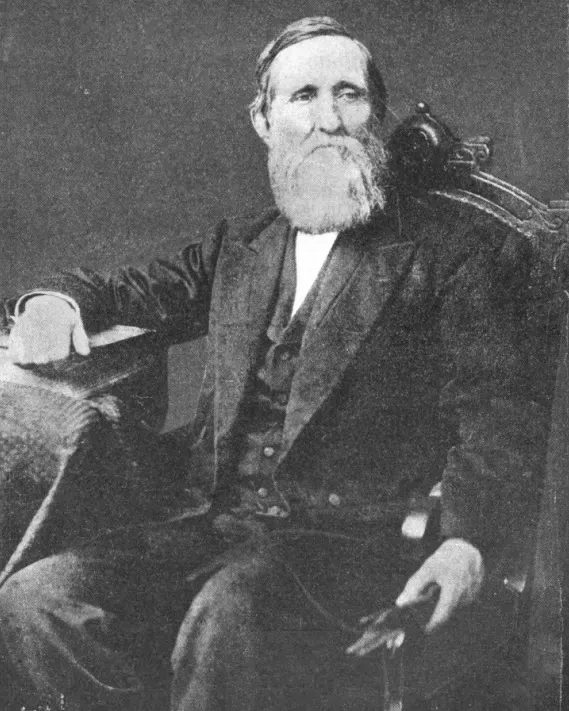
On that March morning in Jefferson, Georgia, a twenty-six-year-old physician named Crawford Long arranged things rather differently. His patient, James Venable, had two small tumours on his neck - growths he had been putting off having removed precisely because he feared the pain. Long had a different idea. He had noticed, at the ether-sniffing parties that were fashionable entertainment in rural Georgia, that participants under the influence of sulphuric ether seemed not to register physical injury. People fell over, knocked themselves against furniture, and woke up without apparent memory of the collision. Long soaked a towel in ether, held it to Venable’s face, and waited. When Venable went limp, Long cut. The tumour came out. Venable regained consciousness, touched the bandage on his neck, and asked when the operation was going to begin. Long charged him twenty-five cents for the ether, a dollar for the excision, and wrote it down in his records.
What Long had grasped, from party tricks and careful observation, was something that had been hovering at the edges of chemistry for decades. Humphry Davy had noted in 1800 that nitrous oxide appeared to dull pain and speculated, in a single prescient sentence, that it might be used during surgical operations. Nothing happened. The chemical knowledge existed; the institutional will to apply it did not. Surgeons had absorbed the screaming into their conception of what surgery was. It was not a problem to be solved; it was simply the price. Long saw it differently - not as a philosopher or reformer, but as a practical man who had watched people inhale a chemical and stop feeling things, and had drawn the obvious conclusion.
He went on to use ether for six more surgeries over the following years, including amputations. In 1845 he administered it to his own wife during childbirth. He told colleagues. Word spread, slowly, through the particular fog of a rural Georgia medical practice in the 1840s. And then, for reasons that historians still find baffling, he did not publish. He kept records, he had affidavits, he had patients who could confirm the dates - but he sat on it all for seven years. In October 1846, a Boston dentist named William Morton performed a very public demonstration of ether anaesthesia at Massachusetts General Hospital, before an audience of surgeons, and received the credit that Long had quietly earned. The room where Morton operated is still called the Ether Dome.
Long finally published his account in 1849, in the Southern Medical and Surgical Journal, partly out of injured professional pride. By then, three other men - Morton, Charles Jackson, and Horace Wells - were in open warfare over priority, and a $200,000 Congressional reward was at stake. Long entered the dispute late, armed with documentation that predated all of them by four years, and was largely ignored. William Welch, one of the founders of Johns Hopkins, dismissed him: “We cannot assign to him any influence upon the historical development of our knowledge of surgical anesthesia.” The politics of the East Coast medical establishment had already decided its version of the story.
Long died in 1878, still without the recognition the evidence warranted. He collapsed while delivering a baby in Athens, Georgia - his last act the same as his most famous one: keeping someone out of pain. He is buried at Oconee Hill Cemetery. His name is on a county, a museum, a postage stamp, and one of the two statues Georgia placed in the National Statuary Hall in Washington, where he stands alongside his college roommate Alexander Stephens, the future Vice President of the Confederacy. History assembles its strange combinations.
The date of his first operation, 30 March, became National Doctor’s Day in the United States - though most people could not tell you why. What Crawford Long did that morning was not dramatic. He did not publish a paper or address a lecture hall or patent a device. He noticed something, thought through its implications, and applied it. One man stopped screaming. Then another, and another. The operating theatre, slowly, went quiet.