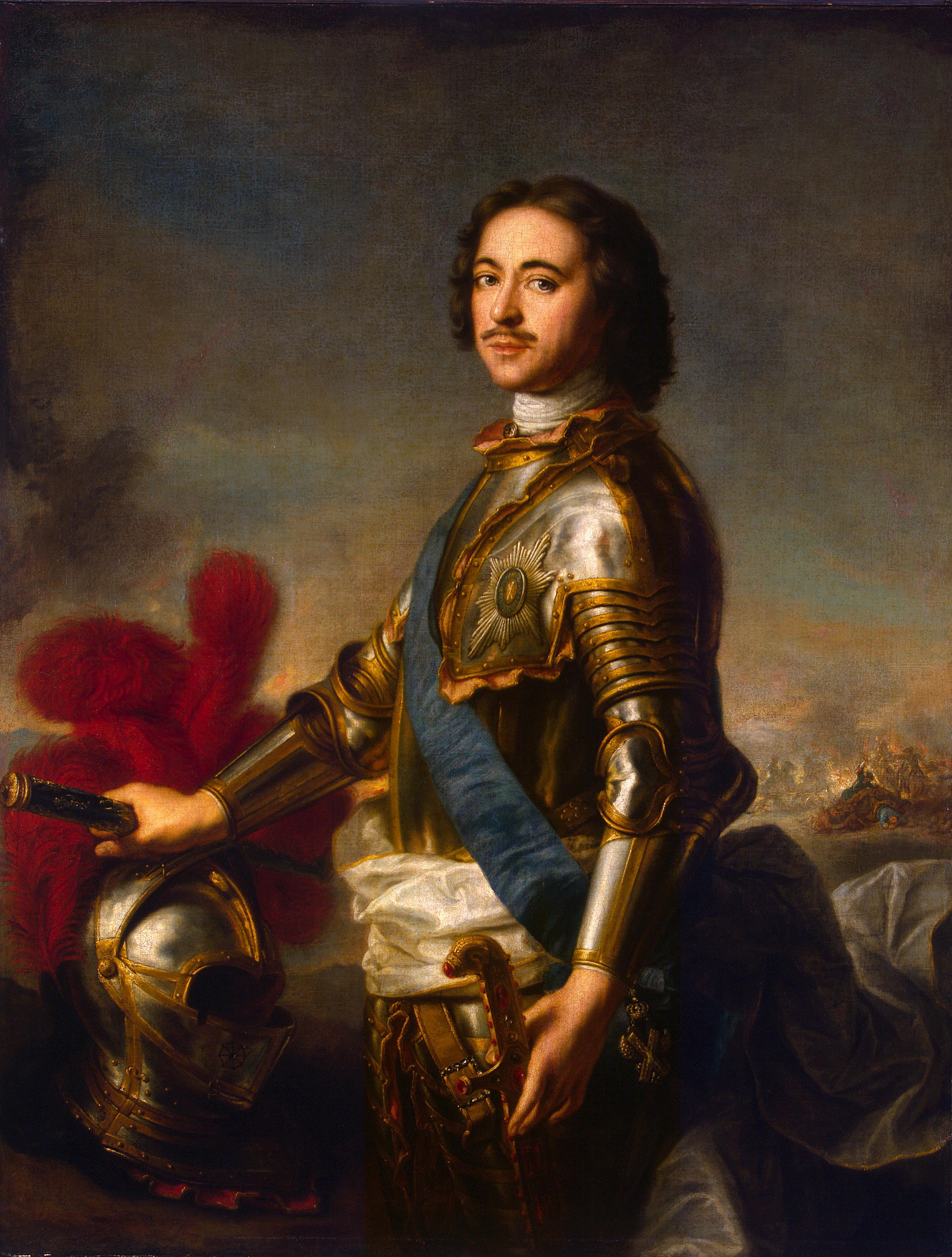
There is a phrase Russians use about Saint Petersburg: that it was built on bones. It is not a metaphor. The Neva delta in 1703 was a waterlogged tangle of marshes and islets, flooded regularly by the river and the Baltic beyond it, battered by cold that arrived early and left late. To build anything there required driving wooden piles through metres of peat and mud until they hit something solid. The men who did the driving were serfs, prisoners, and conscripted labourers brought in under threat. Estimates of the death toll during the city’s first two decades of construction range from 30,000 to 100,000. The records were not kept with precision. The bodies are still there, somewhere beneath the foundations.
Peter the Great knew this and proceeded anyway. When he ordered a fortress built on Zayachy Island on 27 May 1703 - the date Russians still mark as the city’s birthday - he was in the middle of a war against Sweden that he had already lost once. The Battle of Narva in 1700 had demonstrated what happened when a Russian army met Charles XII in the field: the Swedes had routed a force three times their size in a blizzard, captured 145 artillery pieces, and taken most of the Russian officer corps prisoner. Peter rebuilt the army from the artillery up, cast new cannon from monastery bells when the old guns were gone, and went looking for another way in. The Neva delta was Swedish territory he had recently captured. Building a city there was a statement of intent: he meant to stay.
The city served immediate military logic - a naval base on the Baltic, a supply route that the Swedes could not easily cut - but Peter had something larger in view. He had spent 1697 and 1698 travelling western Europe under the thin fiction of a diplomatic mission. The Grand Embassy, as it became known, was actually a working tour: Peter spent weeks in Amsterdam and Deptford learning shipbuilding from the inside, visited arsenals and workshops and naval yards, recruited hundreds of engineers, doctors, naval officers, and craftsmen to take home. What he saw convinced him that Russia was a century behind - in manufacturing, in military organisation, in administrative capacity - and that the gap would kill the empire if left unclosed. Moscow, with its entrenched church hierarchies and its boyar aristocracy and its deep suspicion of the foreign, was not the place to close it. A new city on the Baltic, facing west by geography and design, was.
He moved the capital from Moscow to Saint Petersburg in 1712. The boyars had to follow; Peter made attendance at court compulsory and moved the apparatus of government with him. The nobility was required to shave their beards - Peter had been personally cutting them off at court banquets since returning from Europe - to wear European dress, to send their sons to study in the West or to the new schools he was building at home. The church was stripped of its patriarchate and brought under state control. These were not gentle reforms. They were the habits of a man who had watched Russia humiliated at Narva and had decided that the country would change or it would not survive, and who had enough personal authority and physical intimidation to make that choice stick. Peter was six foot seven and capable of sudden, terrible violence. He had his own son tortured and killed for opposing the reforms. The city he built was the most visible sign of what he was willing to do.
Saint Petersburg in the eighteenth century grew at a pace that matched the ambitions of the men and women who ran it. Peter’s successors - and they were frequently women, the empire’s succession being a chaos the reforms had not fixed - spent lavishly on the Baroque and Neoclassical facades that still line the Neva embankments. Catherine the Great founded the Hermitage in 1764 to house her art collection, which by her death had grown to 38,000 pieces. The Winter Palace, the Admiralty, the Bronze Horseman - Falconet’s statue of Peter himself, commissioned by Catherine - turned the swampy fortress into something that European visitors compared, not always grudgingly, to Amsterdam or Paris. The city became Russia’s face to the world because that was the precise function Peter had built it for. Every diplomat who arrived by sea came in through the Neva. The look of the place told them, before anyone said a word, which empire they were dealing with.
It ran the Russian Empire for 215 years, through the reigns of fifteen tsars, through war with Napoleon - who took Moscow but never reached Saint Petersburg - through the emancipation of the serfs, through industrialisation that turned it into a city of factories alongside its palaces. In 1914, as war with Germany began, the government renamed it Petrograd, on the grounds that the original name sounded too German. The irony that a city Peter had built explicitly to link Russia to Germany and the wider German-speaking world should become an embarrassment on those grounds was not widely remarked upon. Ten years later, after Lenin died, it became Leningrad. The man who had, in March 1918, moved the capital back to Moscow - fearing the German advance after Brest-Litovsk, though the anxiety about the exposed position on the Baltic never quite left Bolshevik thinking - was memorialised in stone and neon across the city he had effectively abandoned.
The siege the city endured between 1941 and 1944 was among the most catastrophic in modern history. German and Finnish forces surrounded it for 872 days. The official death toll is 800,000 civilians. The actual figure may be higher. The city ate its rats, then its cats, then its leather. The Hermitage staff evacuated the collection east - over a million pieces - and left the frames hanging on the walls so the Germans, if they got in, would see only the shapes of what had been there. They never got in. The city did not fall. It may have been the most consequential act of defiance in the twentieth century, for the simple reason that a city willing to die rather than surrender is not a city you can count on to break.
Russia got Saint Petersburg back in 1991, the name returning in a referendum the same year the Soviet Union dissolved. Moscow remains the capital, as it has been since 1918. Saint Petersburg has five million people, the Hermitage, Nevsky Prospekt, and the peculiar status of a city that carries more history than any other place in the country except the one that governs it. Russians call it the cultural capital, which is both true and slightly consoling - the way a city that was once the engine of the empire adjusts to being its museum.
The bones are still in the foundations. The view from the Winter Palace embankment still faces west. Peter got what he built it for.