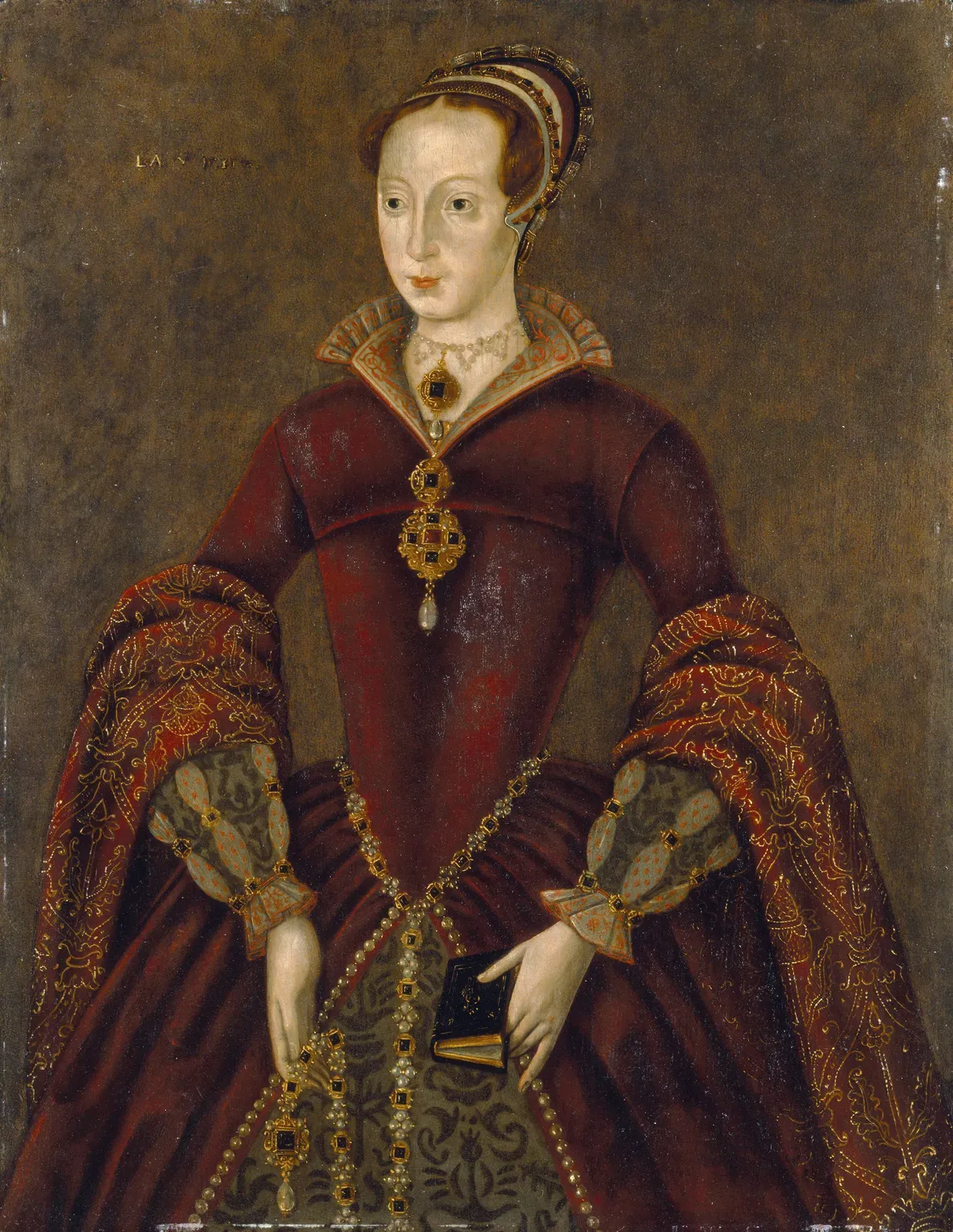
Most people who can name Henry VIII’s six wives would struggle to place Lady Jane Grey. She was queen of England for nine days in July 1553, and then she was not. The episode sits in the gap between Edward VI and Mary I like a footnote someone forgot to expand - which is a pity, because it tells you more about how Tudor power actually worked than half the set-piece coronations that followed.
On 10 July 1553, the Privy Council proclaimed Jane queen in London. She was sixteen, a great-granddaughter of Henry VII through his younger daughter Mary, and a committed Protestant. She had not asked for the job. The dying Edward VI, fifteen years old and without an heir, had been persuaded by his chief minister, John Dudley, Duke of Northumberland, to rewrite the succession. Henry VIII’s Third Succession Act of 1543 had settled the crown on Mary, then Elizabeth, then the Suffolk line. Edward’s “Devise for the Succession” cut both of his half-sisters out and named Jane instead. Parliament had never repealed the earlier Act. A dying boy and a circle of Protestant nobles simply decided the statute no longer applied.
The motive was religion dressed as statecraft. Mary was Catholic. If she took the throne, the Reformation Edward had pushed through - the Book of Common Prayer, the stripping of altars, the Protestant settlement - would be reversed. Northumberland had married his son Guildford Dudley to Jane that May, which made the arrangement look less like constitutional reform and more like a family firm securing its franchise. Jane herself, by most accounts, was reluctant. She was highly educated, pious, and uninterested in ruling. That did not matter. In Tudor politics, teenagers were pieces on a board, not players.
Mary refused to be a piece. She fled to East Anglia, raised her standard, and found that the country preferred a legitimate daughter of Henry VIII to a Protestant cousin installed by a duke. Within days, support for Jane in London began to dissolve. On 19 July the same Privy Council that had proclaimed her switched allegiance, declared for Mary, and had Jane and Guildford locked in the Tower. Nine days. The conspiracy had misread the one force Tudor elites kept underestimating: popular acceptance of who had the right to wear the crown. Nobles could rearrange paper. They could not rearrange the country.
Jane might have lived. Mary initially spared her, treating the girl as Northumberland’s instrument rather than the author of the plot. Northumberland himself was executed that August. Jane stayed in the Tower, a prisoner but not yet a corpse, until her father, Henry Grey, Duke of Suffolk, joined Wyatt’s Rebellion in early 1554 - an uprising against Mary’s planned marriage to Philip of Spain. That made Jane a living alternative again, whether she wanted to be or not. Mary could no longer afford the risk. Jane and Guildford were beheaded on Tower Green on 12 February 1554. She was seventeen, or possibly still sixteen. She went to the scaffold with a composure that Protestant writers would dine out on for the next century.
Foxe’s Book of Martyrs turned her into a Protestant saint: the innocent girl murdered by Catholic tyranny, proof that Mary’s England burned and beheaded the godly. The propaganda worked. “Bloody Mary” stuck. Jane’s death did not save the Protestant cause on its own - Elizabeth’s accession in 1558 did that - but it gave the cause a face and a scaffold speech. A failed coup became a martyrdom narrative, which is often the more durable form of victory.
I keep coming back to the constitutional point, because it is the part that still stings. An Act of Parliament named Mary. A dying king and a duke tried to overwrite it for confessional reasons. The public, and then the Council, restored the statute by force of refusal. Jane Grey’s nine days were not a reign so much as a stress test: how far could elite panic bend the succession before the country snapped it back? Not very far. The girl who never wanted the crown paid for the experiment with her head, and England got Mary, then Elizabeth, and a religious rollercoaster that still defines how we tell the Tudor story. Most people still cannot place her. The scaffold remembers.