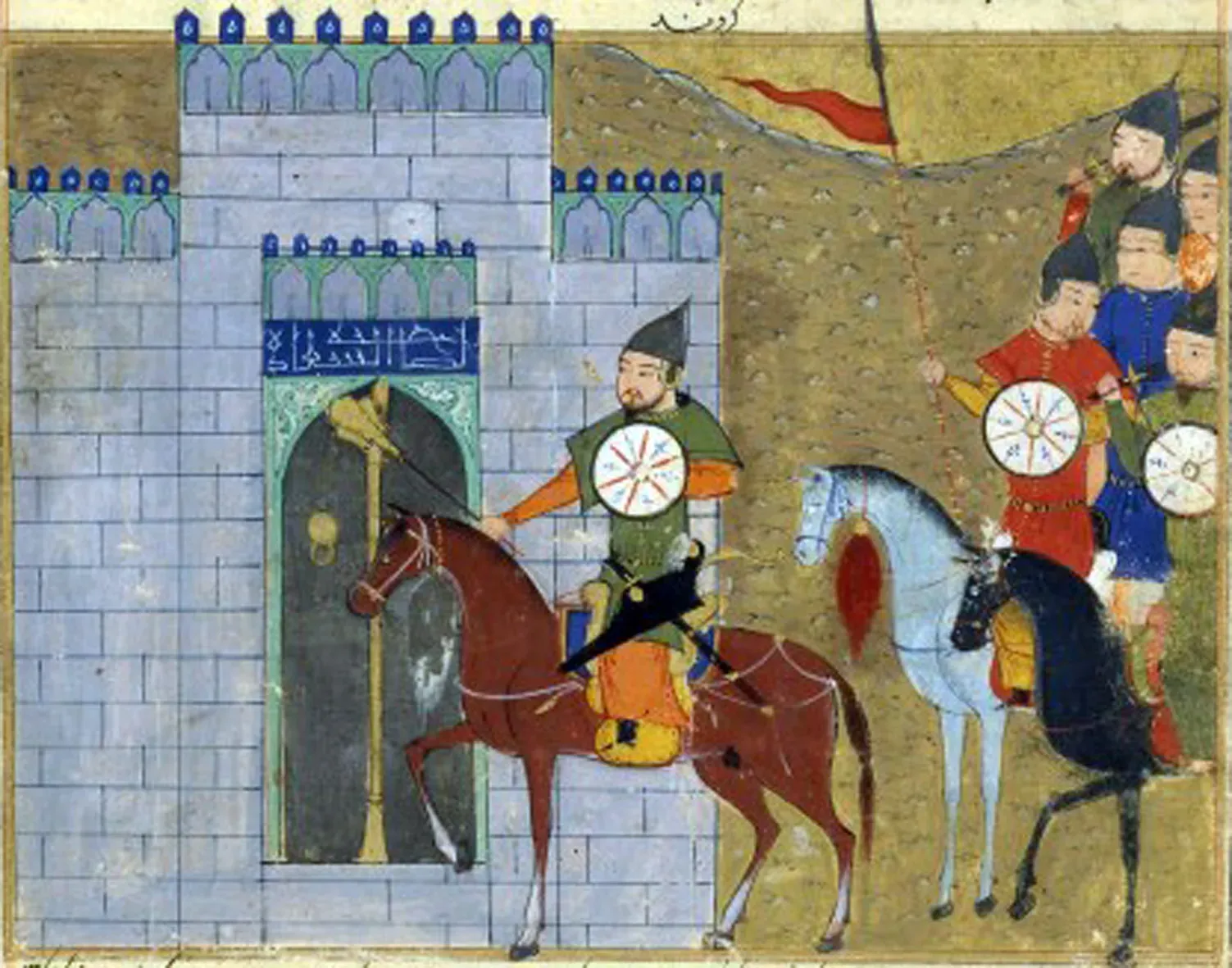
On 31 May 1215, the smoke rising from the ruins of Zhongdu signalled more than the sack of a great city. It marked the moment a nomadic steppe confederation acquired the keys to run the world. For months, the primary capital of the Jurchen-led Jin Dynasty had been starved, besieged, and abandoned by its own emperor, Xuanzong, who had fled south to the relative safety of Kaifeng. When the city finally fell to Genghis Khan’s Mongols, the resulting slaughter was so systematic, and the looting so thorough, that visitors months later reported the streets were slick with human fat and the bones of the dead formed mountains. But beneath the horrific violence of the sack lay a far more significant transformation. By taking Zhongdu - the city we now know as Beijing - the Mongols did not just capture an imperial treasury; they captured the future of warfare for centuries to come.
To understand the scale of this military leap, one must look at the traditional limits of nomadic power. Historically, steppe horsemen were masters of mobility, speed, and open-field slaughter, but they were utterly useless against a stone wall. A fortified city was an insurmountable obstacle to a force that lived in the saddle and relied on the bow. Had the Mongols remained a purely cavalry army, their empire would have been a transient raid, a brief storm that blew out as soon as it hit the first serious line of fortresses. Zhongdu changed everything. By capturing the Jin capital, Genghis Khan, who saw his army’s limitations clearer than anyone, absorbed thousands of Chinese engineers, technicians, and defectors who understood the complex mathematics of siege craft.
I find the technological transfer that occurred in the ruins of Zhongdu far more consequence-laden than the battlefield victories that preceded it. Suddenly, the Mongols were no longer just horse archers; they were in possession of traction trebuchets, siege towers, and, most crucially, early gunpowder weapons. They learned to manufacture and deploy “thunder crash bombs” - primitive but terrifying explosive devices - and incendiary weapons that could reduce wooden fortifications to ash. This was the military-technological engine that would power their subsequent campaigns. When the Mongols turned west to annihilate the Khwarezmian Empire in Central Asia and Persia just four years later, they did not arrive as a primitive horde. They rode in as a high-tech, engineering-heavy army capable of systematically dismantling some of the most sophisticated fortifications in the Islamic world.
The fall of Zhongdu also permanently altered the geopolitical landscape of East Asia. The Jin Dynasty, crippled by the loss of their strategic and economic heartland, was reduced to a rump state, permanently defensive and destined for complete destruction by 1234. More enduringly, the victory anchored the Mongol Empire in northern China. Decades later, Genghis Khan’s grandson, Kublai Khan, would look at the ruins of Zhongdu and see the perfect site for his new imperial capital, renaming it Dadu. In establishing the Yuan Dynasty there in 1271, Kublai cemented Beijing’s role as the political centre of China - a status that has persisted through the Ming, the Qing, and the modern republic.
I look back at that May afternoon in 1215 and see the classic pivot of imperial history. We are often tempted to view the Mongols as a force of pure, destructive nature, a nomadic anomaly that succeeded through sheer ferocity. But raw violence only gets you so far. The genius of Genghis Khan lay not in his ability to destroy and plunder, but in his eager willingness to learn from the people he conquered. At Zhongdu, the Mongols traded the simple purity of the steppe for the complex, administrative, and technological machinery of a sedentary empire. They walked into the city as nomads and walked out as the architects of the largest contiguous land empire in history. The steppe had found its engine, and the rest of the world was about to learn to its sorrow just how fast it could run.