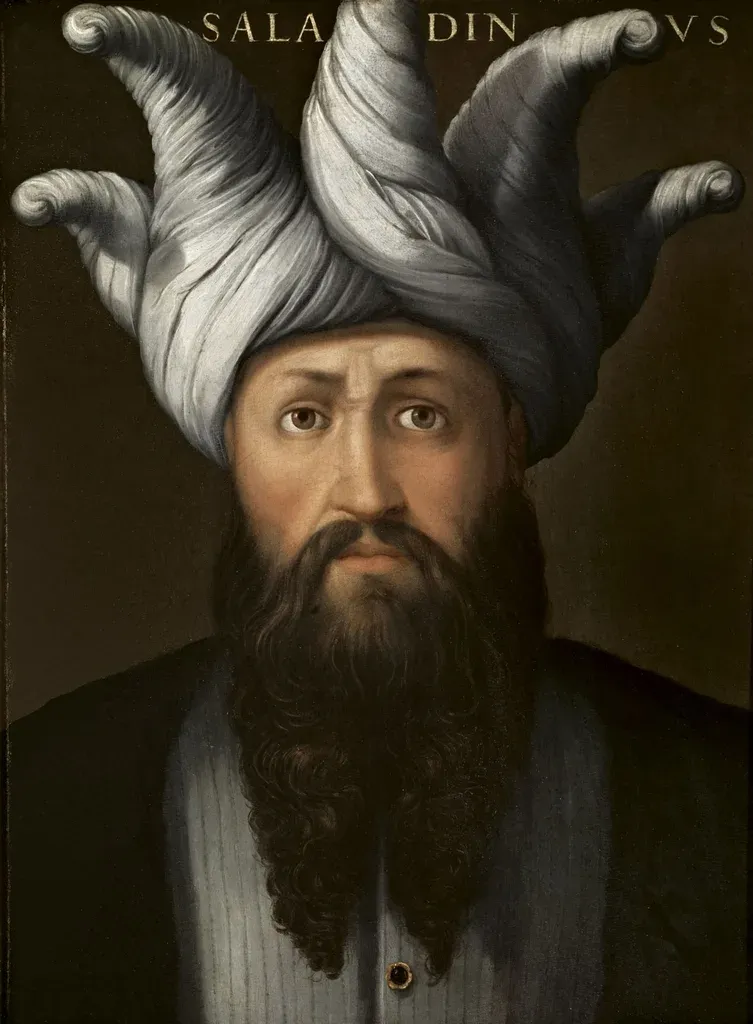
On 21 August 1169, the paved esplanade between Cairo’s two great imperial palaces, the Bayn al-Qasrayn, dissolved into a slaughterhouse. Fifty thousand black African soldiers, armed with heavy composite bows and broadswords, charged the Syrian cavalry of the newly appointed Fatimid vizier, a thirty-one-year-old Kurdish general named Salah al-Din Yusuf ibn Ayyub - known to European history as Saladin. They had come to avenge a decapitation. The previous afternoon, Saladin’s guards had intercepted and beheaded Mu’tamin al-Khilafa, the black eunuch majordomo of the caliphal palace, tossing his severed head into the dust. To the court, Mu’tamin was an administrator; to the army’s massive corps of black infantrymen, he was their patron and political shield. For two ferocious days, the destiny of Egypt hung on hand-to-hand fighting in the alleyways of Cairo. Yet the clash that Arabic chroniclers came to call the Battle of the Blacks (Waq’at al-Abid) was not merely a palace coup gone wrong. It was the violent dismantling of an entire social order: the destruction of the slave army that had propped up Egyptian dynasties for three hundred years.
Western readers often misunderstand Islamic military slavery, conflating it with the chattel slavery that existed elsewhere. The reality in the medieval Middle East was far stranger and infinitely more dangerous. Rulers in Cairo did not import slaves to harvest sugar or dig irrigation ditches; they imported them to monopolise violence. From the ninth century onward, starting with the Tulunid and Ikhshidid dynasties, Egyptian princes realised that domestic levies and tribal confederacies were inherently fickle. If you taxed the local population, local troops sympathised with the tax rebels; if you relied on Arab bedouins or Berber clans, their loyalty belonged to their kinsmen, not the palace. The solution was ruthless and ingenious: buy foreign boys, sever them entirely from family and regional ties, convert and train them, and forge them into a standing army whose sole loyalty was to the master who fed and clothed them.
This system produced a rigid, ethnically segregated military machine. Egyptian rulers operated a deliberate policy of institutional rivalry. They imported Central Asian Turkic and Caucasian captives to serve as mounted archers - the mamluks - while purchasing sub-Saharan Africans to serve as heavy infantry, archers, and palace guards. Known collectively in the chronicles as al-Sudan or abid al-shira (“bought slaves”), these men came primarily from Nubia via the ancient Baqt treaty - which required the Christian kingdoms of the Nile to supply Cairo with hundreds of slaves annually - as well as through trade routes running from the Horn of Africa and across the Sahara. They were not downtrodden labourers. They were a salaried, professional, highly armed military caste. They received cash stipends, owned property, wore fine armour, and lived with their families in their own dedicated cantonments, such as the sprawling quarter of al-Mansura just south of Cairo’s Bab Zuwayla gate.
Over two centuries of Fatimid rule, this black infantry grew from a bodyguard into an indispensable pillar of state power. At their height, they numbered tens of thousands and could make or unmake viziers at will. When Caliph al-Mustansir took the throne as a child in 1036, his mother, a Sudanese woman named Rasad who had herself entered the palace as a slave, governed Egypt in his name. She poured the imperial treasury into expanding the African regiments, even forming black cavalry units to counterbalance the arrogant Turkish horsemen. That experiment triggered a catastrophic civil war in the 1060s, turning Cairo into a battleground as Turkish and Sudanese units fought street by street. Yet despite repeated purges and famines, the fundamental architecture of the Egyptian military never changed: the cavalry rode horses from Syria and the steppes, but the infantry holding the cities and defending the caliph belonged to the Sudan.
By 1169, however, the Fatimid Caliphate was a hollow shell, and Saladin represented a fundamentally incompatible world. Sent to Egypt by the Sunni ruler of Damascus, Nur al-Din, Saladin had inherited the vizierate of an Isma’ili Shi’ite state that he intended to destroy. But he was severely outnumbered. He had roughly five or six thousand Syrian, Kurdish, and Turcoman horsemen at his command; the Fatimid establishment sat upon fifty thousand black infantrymen and thousands of Armenian archers who viewed the young Kurdish vizier as a foreign usurper. Worse still for the soldiers, Saladin did not believe in the Fatimid military compromise. He was a creature of the Syrian frontier, where warfare was dominated entirely by mobile, mounted cavalry funded by military land grants (iqta). Saladin immediately began confiscating the revenues that paid the Fatimid infantry and handing them over to his own Kurdish officers. To the soldiers in al-Mansura, this was an existential threat. If Saladin survived, their stipends, their regiments, and their very existence would be extinguished.
The inevitable explosion arrived when Saladin uncovered - or conveniently fabricated - a conspiracy between Mu’tamin al-Khilafa and the Crusader King Amalric of Jerusalem. According to the pro-Ayyubid chroniclers, the eunuch had written to the Crusaders proposing a joint attack: the Franks would invade from the coast, drawing Saladin out of Cairo, while the palace guards seized the capital from behind. Whether the plot was real or merely a pretext, Saladin struck first. On 20 August, he had Mu’tamin ambushed and executed outside the walls. The next morning, the African regiments marched out of al-Mansura in full battle array, joined by Armenian units and thousands of Egyptian commoners who despised the Syrian occupation. They stormed the vizier’s palace, driving Saladin’s vanguard back toward the Great Palaces in a furious wave of archery and close-quarters melee.
For the first twenty-four hours, the rebels came close to breaking Saladin’s lines. The decisive moment came not from military superiority, but from a sickening act of royal betrayal. The young Fatimid caliph, al-Adid, watched the battle from a fortified wooden pavilion atop the palace walls. The rebel soldiers looked up at their caliph, convinced they were fighting to liberate their spiritual sovereign from Kurdish captors. But Saladin’s brother, Turan-Shah, had no patience for imperial sanctity. Seeing his lines buckle, Turan-Shah ordered his naphtha archers (naffatin) to train their flaming pots of Greek fire directly on the caliph’s pavilion. Terrified of being incinerated alive, the eighteen-year-old caliph appeared at the tower window. Instead of rallying his defenders, al-Adid pointed down at the men dying in his name and screamed orders to the Syrian troops to drive out the “slave dogs.” The psychological blow shattered the rebels. Hearing the imam they were sworn to protect denounce them as animals, the black regiments lost their will to fight.
Saladin then delivered the coup de grâce with clinical cruelty. While Turan-Shah held the square, Saladin dispatched cavalry units around the city flanks to the southern suburb of al-Mansura. They set the soldiers’ residential quarter ablaze, slaughtering the defenceless families trapped inside. When smoke billowed over the southern skyline, the African soldiers realised their homes and children were burning behind them. The battle line dissolved into panic. Abandoning the palace square, the troops rushed back toward the southern gate of Bab Zuwayla, only to find Saladin’s cavalry waiting in the narrow side streets to butcher them. Pinned against the closed city gates, the survivors surrendered under a negotiated promise of safe conduct to Giza across the Nile. It was a lie. As soon as the disarmed soldiers crossed the river, Turan-Shah fell upon them and slaughtered virtually every man.
The Battle of the Blacks was the true end of the Fatimid Caliphate, even if the formal obituary took two more years to write. Saladin replaced the palace eunuchs with his own loyalists, demolished the charred ruins of al-Mansura and turned the ground into a public garden, and billeted Syrian cavalry in the soldiers’ confiscated estates. When Caliph al-Adid died under mysterious circumstances in September 1171, there was not a single soldier left in Cairo to raise a sword for the Shi’ite dynasty. Saladin abolished the caliphate with a simple stroke of the pen, ordering the Friday sermon read in the name of the Sunni Abbasid caliph in Baghdad. The black African regiments that had garrisoned Egypt for three centuries were permanently wiped from the country’s military rolls. Never again would an Egyptian dynasty field a mass, salaried African infantry; Egypt became the exclusive domain of the white Mamluk cavalry, and a standing infantry would not return to the Nile until Ottoman matchlocks arrived in 1517.
I find in the tragedy of 21 August 1169 the ultimate indictment of military slavery. The rulers of Cairo believed they had solved the timeless problem of statecraft by purchasing men from across the desert, stripping them of homeland, and buying their loyalty with dinars. But you cannot construct an enduring state on purchased men. The Fatimid imams created an army of slaves to shield themselves from their own subjects, only to watch those soldiers become a target of hatred, and finally discarded them to save their own skins from a Kurdish warlord. The fifty thousand men who died on the stones of Bayn al-Qasrayn and in the ashes of al-Mansura were neither heroic liberators nor mindless rebels. They were the disposable instruments of an exhausted empire, caught between a treacherous caliph who disowned them from a palace tower and a conqueror who built a dynasty on their bones.