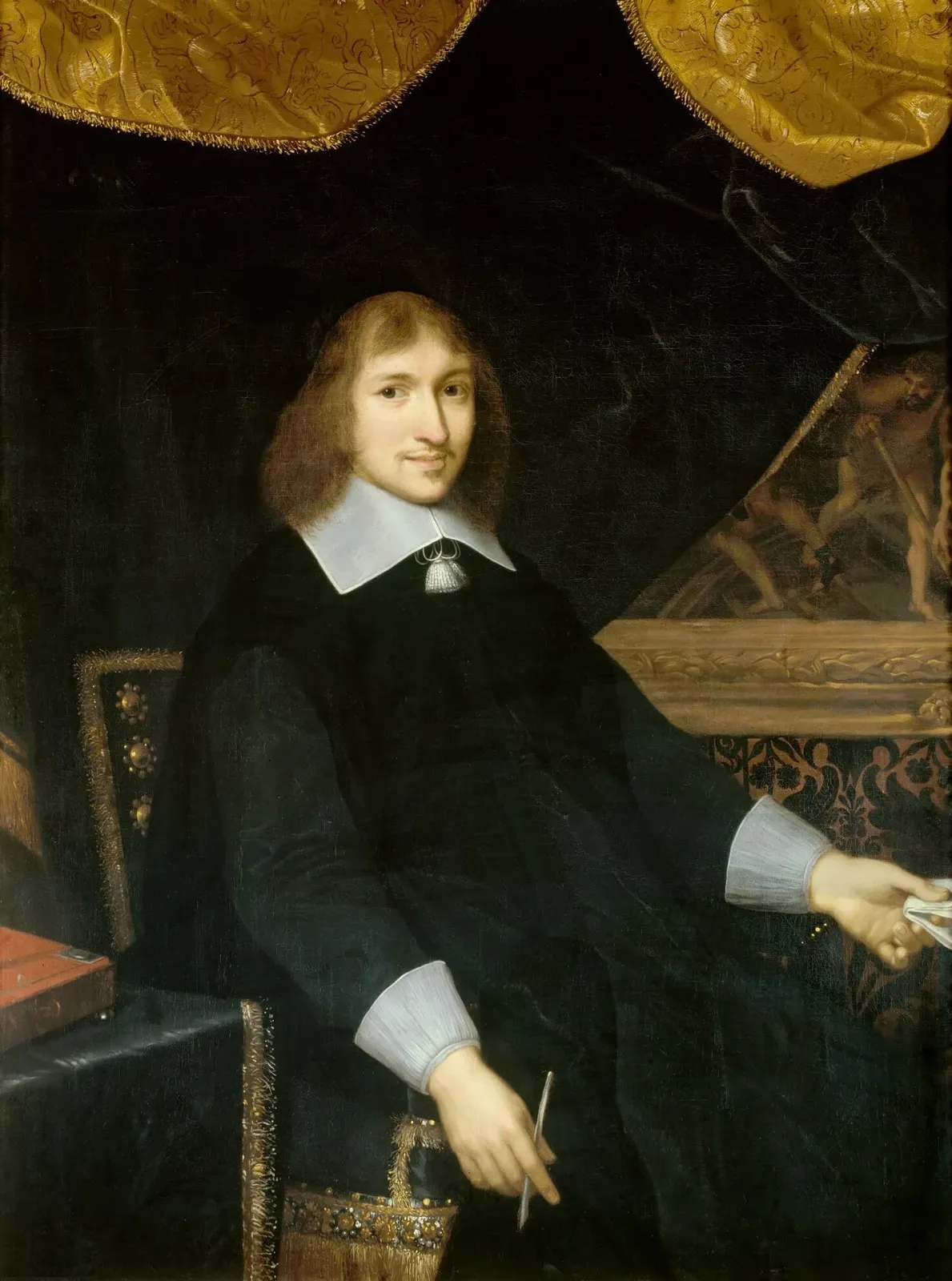
On the morning of 5 September 1661, a sedan chair carrying the Superintendent of Finances of France came to a sudden halt outside the cathedral in Nantes. A company of grey-horsed cavalrymen had blocked the narrow street. Stepping forward from among them was a forty-eight-year-old Gascon soldier named Charles de Batz-Castelmore, sieur d’Artagnan, captain-lieutenant of the King’s Musketeers. D’Artagnan drew his sword, presented a royal warrant signed by King Louis XIV, and informed Nicolas Fouquet that he was under arrest for high treason and embezzlement.
If the scene feels like a chapter torn from The Vicomte de Bragelonne, that is because Alexandre Dumas lifted it almost verbatim from the historical record. Dumas knew pure theatre when he saw it. But what Dumas softened into a romantic duel of chivalry, musketeer camaraderie, and aristocratic bravado was, in reality, something much uglier: the first cold-blooded political execution of the reign of the Sun King.
To understand why Fouquet had to fall, you have to look at the financial sewer that was seventeenth-century France. For nearly two decades, the kingdom had been managed by Cardinal Mazarin, who had ruled France during Louis XIV’s childhood and steered the Crown through the chaotic noble rebellions known as the Fronde. Mazarin had saved the throne, but he had also looted it on an epic scale, amassing a personal fortune estimated at thirty-five million livres - the largest private hoard in French history - while the royal treasury lived from hand to mouth.
Nicolas Fouquet was the man who kept that rotten machinery moving. Appointed Superintendent of Finances in 1653 at the age of thirty-eight, he was brilliant, charming, cultivated, and immensely capable. When the royal coffers were empty, Fouquet used his personal credit to borrow vast sums at extortionate rates from private financiers to pay the king’s armies. The boundary between the state’s money, the cardinal’s private cut, and Fouquet’s own pocket was never clean, and Fouquet saw no reason to clarify it. He skimmed millions, patronised artists, bought an island fortress off the coast of Brittany, and adopted a family coat of arms bearing a squirrel and the Latin motto Quo non ascendet? - “To what heights will he not climb?”
In an absolute monarchy, asking that question out loud is a death wish.
When Mazarin died in March 1661, Fouquet believed his hour had arrived. He expected to be named Chief Minister, walking in the footsteps of Cardinal Richelieu and Mazarin. Instead, the twenty-two-year-old Louis XIV shocked his council by announcing that he would govern alone: there would be no chief minister, and no decree would be signed without the king’s express command. Fouquet treated the young king’s announcement as youthful posturing. He assumed a monarch who spent his days dancing in court ballets and hunting stags would soon tire of ledgers and hand the keys of the realm back to an experienced financier.
It was a fatal misreading of Louis XIV. The boy king remembered every humiliation of the Fronde - the nights his mother had fled Paris with him in secret, the unpaid bills, the arrogance of over-mighty subjects who treated the Crown as a client. And standing in the shadows behind the young king was Jean-Baptiste Colbert, Mazarin’s former clerk and personal accountant. Colbert hated Fouquet with the venomous, ledger-keeping intensity that only an industrious bureaucrat can direct at a flamboyant aristocrat. Armed with Mazarin’s private papers, Colbert began feeding Louis secret dossiers detailing the chaotic state of Fouquet’s books, his astronomical profits, and his suspicious naval fortifications on Belle-Île.
Louis decided to destroy Fouquet, but he did not do it with a public dismissal. He chose deceit. For six months, the king played a game of calculated duplicity that would have made Machiavelli blush. Louis smiled at Fouquet in council, praised his administrative talent, and asked for his private counsel. He persuaded Fouquet to sell his prestigious office of Procureur Général to the Parlement of Paris - subtly hinting that the king needed the money and that Fouquet would soon be rewarded with the premiership. The office had conferred legal immunity, shielding Fouquet from any trial outside the regular magistrates of Paris. Blushing with ambition, Fouquet sold the post for over a million livres and handed the money directly to the Crown, stripping off his own armour with a smile.
Then came the party that sealed his fate. On 17 August 1661, Fouquet invited the king, the Queen Mother, and the entire court to celebrate the completion of his country estate, Vaux-le-Vicomte. It was the most dazzling private fete in French history. The architect Louis Le Vau had built a domed classical palace; Charles Le Brun had covered the ceilings in frescoes; André Le Nôtre had carved parterres, canals, and cascading fountains out of the wilderness. Molière staged a brand-new comedy, Les Fâcheux, with music composed by Jean-Baptiste Lully. Six thousand guests ate from solid gold and silver tableware, followed by a fireworks display that turned the night sky above the estate into daylight.
Fouquet thought he was honouring his king. Louis saw only an insult. The Superintendent of Finances was living in a splendour that eclipsed any royal palace in the kingdom, paid for with money that rightfully belonged to France. Voltaire later put it perfectly: “On 17 August, at six in the evening, Fouquet was King of France; at two in the morning, he was nobody.” Louis reportedly wanted to arrest his host before the fireworks had even cleared the moat, but Anne of Austria pulled him back, warning him that arresting a man under his own roof during a banquet would be an indelible stain on royal honour.
So the king waited another three weeks. Fouquet owned thirty-six armed ships and a fortified base at Belle-Île; if he took fright in Paris, he might escape by sea and ignite a civil war. Louis lured his finance minister into a trap by moving the court west to Nantes under the pretext of opening the regional estates of Brittany. Fouquet, shivering with a malaria fever, dutifully dragged himself to the Atlantic coast to attend the king.
On the morning of 5 September, Fouquet attended a council meeting at the Château des Ducs de Bretagne. Louis was warm and attentive, keeping him engaged in conversation until the last possible moment. When Fouquet stepped out into the courtyard and climbed into his sedan chair, d’Artagnan and his musketeers stepped out from the shadows. The trap snapped shut.
What followed was not a trial, but a state-managed vendetta. Louis abolished the post of Superintendent of Finances entirely, ensuring that no subject would ever again control the royal purse. He created an exceptional tribunal, the Chambre de Justice, packed it with handpicked judges, and placed Colbert in charge of the prosecution. Colbert seized Fouquet’s private correspondence, doctored files, and intimidated witnesses.
Yet the magistrates refused to deliver the royal execution Louis demanded. Fouquet defended himself from his prison cell with breathtaking lucidity for three long years, turning the courtroom into an indictment of the Crown’s own corruption. He proved that the financial manipulations he had carried out were done under Mazarin’s direct orders and with Mazarin’s knowledge. By 1664, public sympathy had shifted entirely. Writers like Jean de La Fontaine and Madame de Sévigné openly petitioned for his pardon. When the judges finally voted, they defied the king: thirteen magistrates voted for banishment, while only nine voted for death.
Under French law, the monarch’s ancient prerogative was the power of mercy - the right to commute a death sentence to banishment or prison. Louis XIV used his royal prerogative to do the exact opposite. Furious that his court had failed to kill Fouquet, the king intervened to worsen the sentence, commuting banishment into solitary confinement for life.
Fouquet was loaded into a carriage and escorted by d’Artagnan across the kingdom to Pignerol, a bleak mountain fortress in the Italian Alps. There, under the watchful eye of the gaoler Saint-Mars, he was sealed into a cell, denied pen, ink, paper, or books, and forbidden all contact with his family. He remained buried alive in that alpine stone tomb for nearly nineteen years until his death in 1680.
The final insult was aesthetic. Louis did not merely destroy the man; he cannibalised everything Fouquet had created. The king seized Vaux-le-Vicomte’s tapestries, its marble statues, its collection of rare books, and even dug up hundreds of its mature orange trees to replant them in the royal orangerie. Most importantly, he hired the entire creative team that Fouquet had brought together: Le Vau, Le Brun, and Le Nôtre were put on royal retainers and ordered to build Versailles. The gilded palace that would define the Sun King’s reign was born as a copy of the house he had destroyed out of jealousy.
I have always found something chilling in the arrest at Nantes. Dumas gave us the romance of the musketeer’s sword, but the real sword belonged to a twenty-two-year-old autocrat who understood that absolute power requires absolute ruthlessness. The squirrel had dared to climb toward the sun, and the sun had incinerated him without blinking.