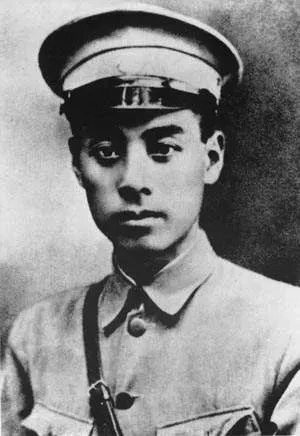
At two in the morning on 1 August 1927, a group of officers who had spent the previous weeks pretending loyalty to the Nationalist government of China gave the order to attack the garrison city of Nanchang from four directions at once. Zhou Enlai, He Long, Zhu De, Ye Ting, Liu Bocheng, Chen Yi, Nie Rongzhen, Ye Jianying and a young regimental officer named Lin Biao led roughly 20,000 troops against a Nationalist garrison that outnumbered and outpositioned them. Four hours later the city was theirs. They took 5,000 small arms and close to a million rounds of ammunition from the arsenals they captured. It should have been a triumph. Within days it was a rout, and the men who had planned it were fugitives, fleeing south with a shrinking army that would collapse to barely a thousand soldiers before the year was out. China’s People’s Liberation Army marks 1 August as its birthday. It is one of the stranger founding stories a national army has ever adopted: not a victory, but the opening move of a defeat.
The context explains the desperation behind it. Four months earlier, on 12 April 1927, Chiang Kai-shek had turned the Shanghai underworld and his own troops on his Communist allies, killing hundreds and arresting thousands in a single coordinated purge that ended the First United Front between the Kuomintang and the Chinese Communist Party. The Communists had spent years building influence inside a coalition that could now exterminate them with impunity, because they had built that influence without ever building an army of their own. Nanchang was the correction. Whatever else it accomplished, it settled the argument inside the party for good: political power without an army attached to it is a temporary loan, revocable the moment your partner decides he no longer needs you.
The military result was still a disaster. Nationalist forces under Zhang Fakui recaptured Nanchang within days, and the Communist column retreated south toward Guangdong, hoping to seize Guangzhou and link up with peasant risings the Comintern had promised would materialise. They didn’t. The retreating force, worn down by heat and defections, was broken up outside Chaozhou in early October. Zhou Enlai, gravely ill, escaped to Hong Kong with Ye Jianying and Ye Ting carrying two pistols between them. Guo Moruo fled to Japan. He Long went home to find his own family unwilling to shelter a defeated general. What remained of the main force, barely a thousand men, reformed into a single regiment under Zhu De and Chen Yi, who travelled under false names and talked their way into the protection of a Hunan warlord to survive the winter. That remnant grew back to 10,000 by the following spring, when it marched into the Jinggang Mountains and joined the small guerrilla base Mao Zedong had established after his own failed Autumn Harvest rising. Out of two defeats, six months apart, came the nucleus of the army that would eventually win the entire civil war.
The Chinese Communist Party did not get around to formally commemorating the date until 1933, when its Central Committee designated 1 August an annual military holiday, later confirmed by the government of the Chinese Soviet Republic that July. By then the myth-making had caught up with the facts: a chaotic, doomed uprising, launched by men who disagreed with each other about strategy even as they executed it, had been reprocessed into the moment the people’s army was born. It is worth sitting with how odd that choice is. The Soviet Red Army dates itself to the storming of the Winter Palace, an outright seizure of state power. The PLA dates itself to a raid its own leaders were fleeing within a week. The story China’s military tells about its own birth is not one of triumph. It is one of near-annihilation, survived.
That is precisely why it matters. The lesson the survivors of Nanchang carried into the following decades was not “we won a battle.” It was “we cannot exist without our own guns, commanded by nobody but us.” Mao made the doctrine explicit in 1938, writing that political power grows out of the barrel of a gun, and every institution the party subsequently built around its military reflects that sentence taken completely literally. The PLA is not China’s national army in the sense that, say, the Bundeswehr belongs to the German state. It is the party’s army. Chinese law says so directly: the Central Military Commission, not the Ministry of National Defence, holds supreme command, and the state and party versions of that commission share identical membership in all but a brief technical window every five years. Since 1989 the party’s general secretary has automatically chaired it. The Ministry of National Defence exists mainly to talk to foreigners; it has no operational authority over a single soldier.
That arrangement has been tested hard, more than once. Lin Biao, the officer who helped storm Nanchang as a junior commander, rose to become Mao’s designated successor and the PLA’s supreme voice, then allegedly plotted against Mao himself before dying in a 1971 plane crash fleeing toward the Soviet Union - proof that a military patron too closely bonded to the party’s own guns can turn the arrangement on its head. In 1989, the bargain was tested in the opposite direction, when army units were ordered onto the streets of Beijing against unarmed civilians; some commanders, including the 38th Army’s Xu Qinxian, refused outright and paid for it with their careers, a reminder that the party’s control of the gun is a standing project, not a settled fact. In the 1990s the PLA ran hotels, factories and smuggling networks as a substitute for state funding, until Jiang Zemin forced it to divest in 1998 in exchange for a real budget and less political exposure.
Xi Jinping’s contribution to that century-long project has been the most sweeping purge of the officer corps since the Cultural Revolution. More than sixty generals were investigated before 2017. In October 2025, the Ministry of National Defence announced the expulsion of He Weidong, vice-chairman of the Central Military Commission and the PLA’s second-highest-ranking officer, along with Miao Hua, the commission’s former political chief, and seven other senior generals, over corruption cases involving what the ministry called “particularly huge” sums of money. He was the first sitting CMC vice-chairman purged since the Cultural Revolution and the first serving Politburo member investigated under Xi. The generals he removed had, in some cases, been personally promoted by him. The party that emerged from a defeat in 1927 because it needed a gun of its own has spent the century since making sure that gun never points anywhere its leadership doesn’t choose - and every fresh purge is proof that the argument settled at Nanchang never actually stays settled. It just gets refought, one generation of generals at a time.