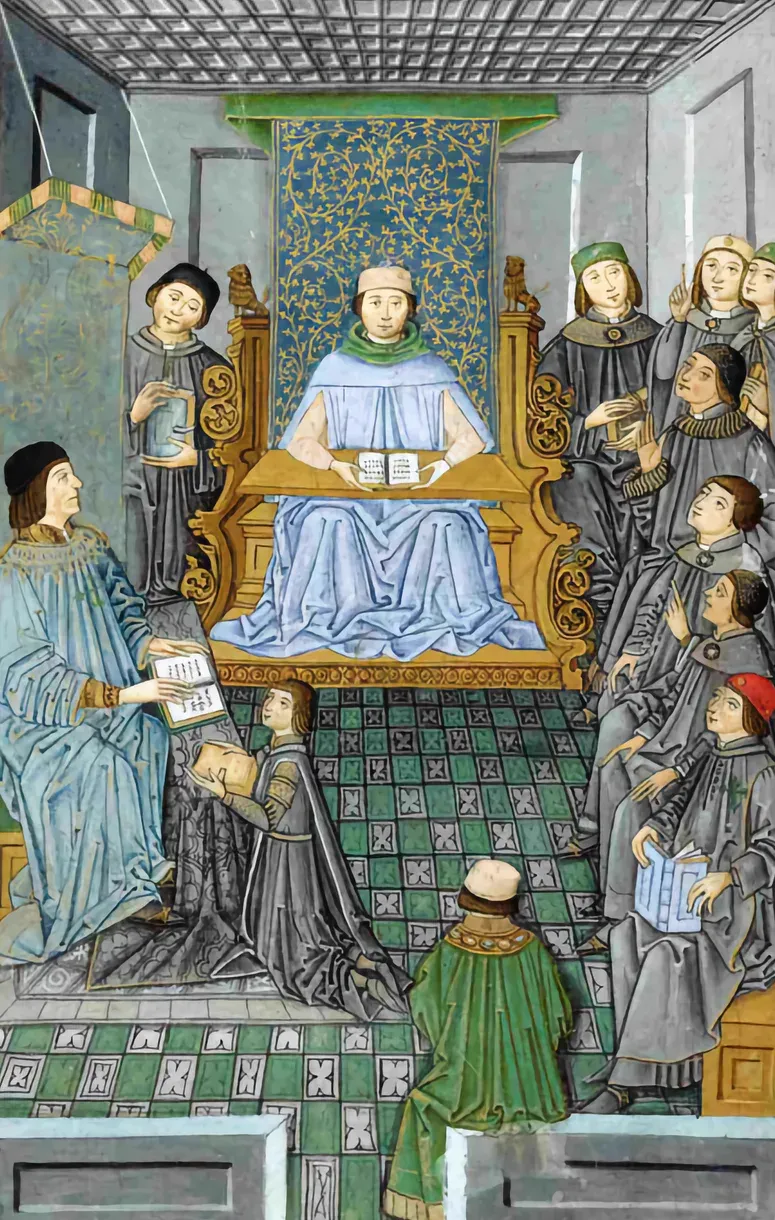
On 18 August 1492, a Spanish scholar named Antonio de Nebrija published a printed book in Salamanca and arranged to present a copy to Queen Isabella I of Castile. When the Queen looked down at the title - Gramática de la lengua castellana - she was genuinely baffled. She asked what possible use such a book could have, given that she and her subjects already spoke the language from birth without needing any scholar to tell them how. The Bishop of Ávila, Hernando de Talavera, stepped in to answer on Nebrija’s behalf with a sentence that laid out the entire political philosophy of the modern state: “Language, Your Majesty, has always been the companion of empire.”
I have always found that exchange far more revealing than the grand royal proclamations of the era. Isabella thought of speech as a domestic habit, like breathing or cooking. Nebrija and her bishop understood that language is an offensive weapon. An army can capture a fortress and a priest can baptise a terrified population, but if you want to rule millions of people across fractured territories, you need a single, uniform administrative code. You need a standardised syntax. You need grammar.
The year 1492 is usually remembered for its headline detonations. On 2 January, Boabdil surrendered the keys of the Alhambra, ending nearly eight centuries of Islamic rule in the fall of Granada. On 31 March, Ferdinand and Isabella signed the Alhambra Decree, ordering every practising Jew in their realms to convert or face exile by the end of July. On 3 August, Christopher Columbus weighed anchor from Palos de la Frontera with three small caravels, sailing blind into the western Atlantic. And fifteen days after Columbus cleared the harbour, while his ships were still somewhere off the Canary Islands, Nebrija published the first formal grammar of any vernacular European language.
Most historians treat Nebrija’s book as a quiet cultural footnote tucked between the expulsion of the Jews and the conquest of the New World. That gets the causation backwards. The grammar was not an intellectual curiosity produced in the slipstream of conquest; it was the blueprint that made imperial rule manageable.
Before Nebrija, grammar belonged exclusively to Latin. Latin was the sacred tongue of Church liturgy, the universal medium of canon law, and the preserve of university elites. The spoken tongues of Europe - Castilian, Tuscan, French, English - were dismissed as vulgar dialects. They were unstable, chaotic, and perpetually shifting from one river valley to the next. No respectable scholar wasted his ink writing rules for street slang.
Nebrija saw the flaw in that snobbery. He had spent a decade studying in Italy, watching Italian humanists revive classical rhetoric, and he returned to Spain convinced that the Castilian crown was making a grave administrative mistake. Iberia in the late fifteenth century was not a unified nation; it was a fractured mosaic of languages and dialects. People spoke Galician, Portuguese, Leonese, Navarro-Aragonese, Catalan, Basque, Mozarabic, Arabic, and Ladino. Even within Castile, the speech of Burgos sounded foreign in Seville.
The Spain we recognise today was not an ancient biological inheritance. It was an artificial project nailed together by royal marriage, dynastic warfare, religious terror, and aggressive taxation. Ferdinand and Isabella had united the crowns of Aragon and Castile in their bedchamber, but their kingdoms remained legally, fiscally, and linguistically distinct. To turn that fragile dynastic alliance into a coherent superstate, the crown had to impose uniformity from above.
A centralised monarchy cannot function through twenty mutually unintelligible regional dialects. Royal chanceries cannot issue tax assessments if the local magistrates cannot parse the verbs. Courts cannot enforce royal edicts if every provincial judge interprets the wording differently. The Inquisition cannot root out heresy without an ironclad standard of interrogation and record-keeping.
Nebrija understood that Rome’s greatest achievement was not its legions, but its alphabet. Legions eventually mutiny or withdraw; a standardised tongue takes root in the soil and outlives the soldiers who planted it. In his famous prologue, dedicated directly to Isabella, Nebrija wrote with ruthless clarity about what lay ahead. When the Catholic Monarchs placed under their yoke “many barbarian peoples and nations of diverse languages,” those conquered populations would need to learn the laws “which the victor gives to the vanquished, and with them our language.”
The timing borders on the uncanny. When Nebrija wrote those lines, Spain did not possess an overseas empire. Isabella held an exhausted, war-torn kingdom that had spent ten ruinous years financing the siege of Granada. Columbus had not yet sighted a single scrap of land in the Caribbean. Yet Nebrija anticipated the machinery of global domination with terrifying precision. He knew that if Spain expanded, it could not govern through improvised translation. It would govern in Castilian, codified, punctuated, and enforced by the page.
What followed over the next century was the practical application of Nebrija’s doctrine. In the Americas, Spanish friars and colonial administrators used Nebrija’s grammatical framework to dissect indigenous languages like Nahuatl and Quechua, subordinating them into Roman script before systematically replacing them with Castilian in the halls of power. Across the Iberian peninsula itself, regional tongues were demoted from administrative languages to provincial dialects. Arabic and Hebrew texts were thrown onto town-square bonfires, and their use in public legal documents was outlawed. To survive under the new regime, you spoke the language of the Queen’s court.
This was not a gentle cultural evolution. It was linguistic standardisation enforced at the point of a pike. By freezing Castilian into an orderly, rule-bound system, Nebrija gave the Spanish crown a portable administrative toolkit. A bureaucrat trained in Salamanca could draft a royal cedula that would be read and obeyed with identical legal force in Seville, Havana, Mexico City, and Manila.
When Queen Isabella held that printed volume on 18 August 1492, she failed to recognise the weapon she was being handed. She saw only an academic exercise describing sounds she already knew. She did not yet realise that empires do not survive on gunpowder and silver galleons alone. Fleets sink, armies rot in the field, and treasuries empty. An empire survives because its subjects write its laws, file its tax forms, and confess their sins in the victor’s tongue.
Five centuries later, the Spanish fleets are timber at the bottom of the ocean, the American silver is spent, and the Habsburgs and Trastámaras are dead dynasties. But nearly five hundred million people across twenty-one countries speak the language Nebrija codified that August morning. Isabella conquered Granada, but Nebrija built the empire that lasted.