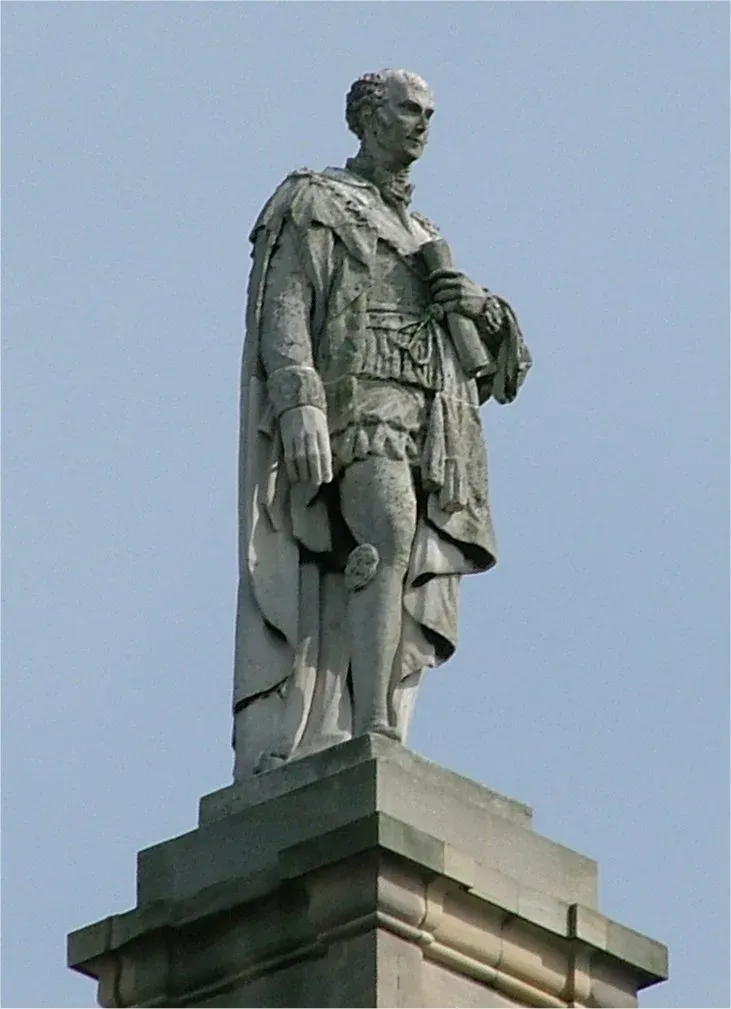
On 28 August 1833, King William IV gave royal assent to the Slavery Abolition Act, wiping out chattel slavery across the vast majority of the British Empire. In the long and dismal record of human legislation, there has never been a statute quite like it. William Wilberforce had died precisely a month earlier, three days after the bill cleared its decisive second reading in the House of Commons, having spent forty-six years turning a fringe moral revulsion into an imperial imperative. With the stroke of a clerk’s pen, more than eight hundred thousand enslaved men, women, and children across the Caribbean, South Africa, and Mauritius were declared legally free.
I am constantly struck by how thoroughly modern commentary has inverted the history of human bondage. We speak of slavery today as though it were a Western invention, an original sin peculiar to European maritime empires. The historical reality is almost the exact inverse. Slavery was not an invention of the British Empire; it was the universal default condition of human civilisation for ten thousand years. From the Sumerian city-states and Roman agricultural estates to the Islamic slave armies of the medieval Middle East, pre-colonial African kingdoms, and the steppes of Central Asia, every major society on Earth enslaved its defeated neighbours and traded in human bodies. What was ordinary in human history was slavery. What was entirely unprecedented was abolition.
To appreciate how radical the 1833 Act was, one has to grasp the sheer economic scale of the surrender. The British West Indian sugar interest was the most entrenched corporate lobby in Parliament, a syndicate of immense wealth whose revenues filled British banks, built Georgian country houses, and underwrote the merchant fleets of Bristol and Liverpool. Britain did not merely pass a pious declaration of human rights. To break the political stalemate, the British government borrowed twenty million pounds to compensate the slaveholders - an astronomical sum representing forty per cent of the Treasury’s entire annual budget. It was one of the largest state loans in human history, a financial burden so vast that British taxpayers only finished paying off the interest on that debt in 2015.
The legislation was neither immaculate nor free of cynical compromise. In a concession to the plantation owners, the Act instituted a transitional “apprenticeship” system, forcing formerly enslaved people over the age of six to continue working forty-five hours a week for their former masters without wages. It was a transparent rebranding of forced labour, designed to guarantee a compliant workforce for Caribbean sugar estates. Yet the moral momentum in Britain had become uncontrollable. When reports reached London of apprentices being flogged on Jamaican treadmills, public fury erupted. Thousands of petitions flooded Westminster, and in 1838 - two years ahead of schedule - Parliament abolished the apprenticeship scheme entirely, granting unconditional freedom.
If Britain had stopped at its own colonial borders, the 1833 Act would still have been a monumental achievement. But what followed was something without parallel in world history: a global superpower dedicating its naval might to policing the moral conduct of the rest of the planet. Through the West Africa Squadron, the Royal Navy blockaded thousands of miles of African coastline. For more than half a century, British crews patrolled fever-ridden waters, seized over sixteen hundred slave vessels, and liberated more than one hundred and fifty thousand captive human beings. Thousands of British sailors died of yellow fever and malaria in the process. London bullied, bribed, and threatened foreign powers - Spain, Portugal, Brazil, and the Ottoman Empire - into signing anti-slavery treaties, deploying gunboat diplomacy not to extract trade privileges, but to extinguish the trade in human souls.
While London treated slave trading as piracy punishable by the gallows, much of the rest of the world looked on with baffled irritation. Chattel slavery did not vanish from the globe because humanity experienced a simultaneous epiphany. Across Africa and the Middle East, institutional slavery endured deep into the twentieth century. The trans-Saharan and Red Sea slave trades continued long after the Atlantic routes had been severed by British frigates. The Ottoman Empire preserved its domestic and concubinage slave markets until its collapse in the First World War. Saudi Arabia and Yemen only legally abolished slavery in 1962 under intense diplomatic pressure. Mauritania became the last nation on Earth to legally abolish the practice in 1981, and did not make slave ownership a criminal offence until 2007. Long before the conclusion of the American Civil War shattered the plantation South, Britain had already turned the eradication of slavery into a worldwide crusade.
It is fashionable today to look back on the British Empire solely through the prism of its hypocrisies and sins, and those sins were real and heavy. But moral history is not a neat ledger of absolute purity. On 28 August 1833, a global empire decided that the buying and selling of human beings was not merely regrettable, but a legal monstrosity that had to be crushed with public money, statute law, and naval cannons. The parliamentarians who passed the Act did not solve every injustice, and they compromised where they should have stood firm. But they took an ancient, universal crime that humanity had practised since the dawn of agriculture and made it a capital offence across the globe. That was not the inevitable drift of human progress. It was a deliberate, costly, and astonishing enterprise - and the world has never seen another like it.