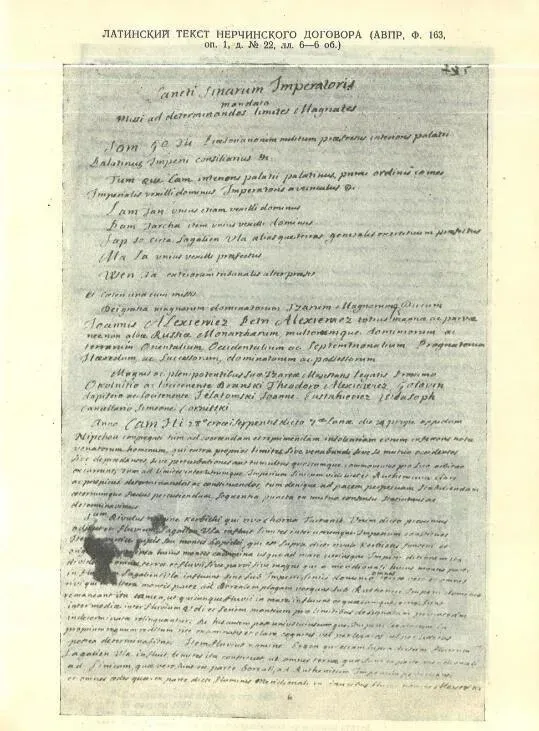
On a desolate riverbank in the Siberian wilderness, on 27 August 1689, two of the world’s most aggressive land empires met to divide a continent they had barely explored. On one side stood a Russian nobleman backed by fifteen hundred exhausted musketeers, stranded five thousand miles east of Moscow. On the other sat a Manchu prince commanding fifteen thousand imperial troops, seventy-six armed riverboats, and a train of siege artillery. To bridge the gap between Muscovite Russian and Classical Chinese, two Jesuit priests - one French, one Portuguese - paced between the pavilions, whispering diplomatic compromises in ecclesiastical Latin. The result was the Treaty of Nerchinsk: the first international agreement China ever signed with a European power.
Today, the Treaty of Nerchinsk is largely forgotten in the West, reduced to a dry footnote in diplomatic history textbooks. Yet whenever I hear commentators in Washington and London profess bewilderment at the modern Beijing-Moscow axis, I find myself wishing they would study that muddy encounter on the Shilka River. Pundits routinely swing between two equally foolish extremes: treating the “no-limits partnership” between Vladimir Putin and Xi Jinping either as an artificial modern novelty that will shatter at the first disagreement, or as an eternal authoritarian alliance forged in ideological steel. It is neither. For more than three centuries, Sino-Russian relations have followed the exact template forged at Nerchinsk: a cold, transactional marriage of convenience between two paranoid continental giants who share thousands of miles of disputed frontier, harbour deep historical suspicions, and strike pragmatic bargains whenever they need to watch their backs against other enemies.
To understand how Moscow and Beijing collided in 1689, you have to appreciate the breathtaking, brutal speed of Russian imperial expansion. In less than a century, Russian Cossacks and fur trappers had sprinted from the Ural Mountains to the shores of the Pacific Ocean. Their fuel was sable - the “soft gold” that funded the Tsardom’s state apparatus and filled the pockets of merchant oligarchs. In the 1640s, warlords like Yerofey Khabarov led ruthless expeditions into the Amur River basin, a fertile, temperate anomaly amid the frozen Siberian taiga. Khabarov’s men did what Cossacks did best: they extorted furs, burned villages, terrorised the local Daur and Tungus populations, and established fortified wooden stockades, most notably at Albazin on the northern bank of the Amur.
To the newly established Qing dynasty, this was an intolerable provocation. The Manchus, who had only recently swept south of the Great Wall to topple the Ming, regarded the Amur basin as their sacred ancestral homeland. The Kangxi Emperor - arguably the most capable ruler of the seventeenth century - was not a monarch to tolerate armed squatters on his northern frontier. Once he had crushed the Revolt of the Three Feudatories and annexed Taiwan, Kangxi turned his attention north. In 1685, he dispatched General Pengchun with ten thousand Bannermen and heavy artillery to wipe Albazin off the map. When the Cossacks rebuilt the fort, the Qing returned in 1686 for a second, brutal siege. Under the Scottish-born mercenary Afanasy Beiton, the garrison of eight hundred Cossacks held out for five months, boiling harness leather and shoe soles for food. By the time a ceasefire was declared, only sixty-six defenders were left alive.
Yet despite the butchery at Albazin, neither empire wanted a total war. Both rulers were playing a far larger game of continental chess. Kangxi was facing an existential challenge to the west: Galdan Boshugtu Khan, the warlord of the Dzungar Mongols, was forging a nomadic empire across Central Asia. If Moscow allied with Galdan, the Qing dynasty could face a catastrophic two-front war on its northern borders. In Moscow, the government of the Regent Sophia - ruling on behalf of the young Peter the Great and his half-brother Ivan - was equally desperate. Sophia’s favourite, Vasily Golitsyn, had just squandered thousands of lives and colossal sums on two disastrous campaigns against the Crimean Tatars. Moscow had neither the money nor the administrative capacity to supply an army across five thousand miles of roadless wilderness. Both empires needed the northern frontier stabilised, and they needed it immediately.
The negotiations at Nerchinsk were an exercise in armed intimidation and diplomatic theatre. Moscow’s envoy, Fyodor Golovin, arrived with grand instructions to demand all territory up to the Amur. When he saw Songgotu’s Manchu flotilla and ten thousand soldiers encamped across the river, Golovin quickly grasped that bluster would get his men slaughtered. The language barrier was bridged by the French Jesuit Jean-François Gerbillon and the Portuguese Jesuit Thomas Pereira. Fluent in Manchu and Latin, the Jesuits acted not merely as translators, but as active negotiators, passing messages between the tents in the dead of night.
The treaty signed on 27 August 1689 was a masterpiece of pragmatic compromise. Russia dismantled Albazin and surrendered all claims to the Amur River valley, pushing its border north to the Stanovoy Mountains. In exchange, Russia kept the vast, fur-bearing wilderness of Transbaikal around Nerchinsk and secured the one prize Moscow coveted above all else: legal trade access to Beijing. Russian merchant caravans were permitted to visit China every three years under official state sanction. Even more remarkably, Nerchinsk shattered traditional Chinese diplomatic protocol. In imperial Chinese theory, the Son of Heaven was the supreme ruler of tianxia - all under heaven - and foreign ambassadors were barbarians who came to kowtow and pay tribute. At Nerchinsk, the Kangxi Emperor discarded that cosmological conceit, signing a bilateral border treaty with the Russian Tsar as an equal sovereign power. The treaty was sworn in Latin before the Christian God and Heaven, an astonishing departure from imperial Chinese tradition.
The peace on the Amur lasted for 170 years, but it lasted only because the underlying power balance remained stable. The moment the Qing Empire fractured in the nineteenth century - crushed by British gunboats in the Opium Wars and consumed by the Taiping Rebellion - the Russians tore up the Treaty of Nerchinsk without a second thought. In 1858 and 1860, Count Nikolay Muravyov-Amursky sailed Russian gunboats down the Amur and forced the dying Qing dynasty to sign the “unequal” treaties of Aigun and Peking. Russia annexed more than one million square kilometres of land - an area larger than France and Germany combined - seizing Outer Manchuria and the Pacific coastline, where it promptly founded the naval fortress of Vladivostok on land the Chinese called Haishenwai.
In Beijing today, that humiliation remains an open, unhealed historical memory. Chinese school textbooks still recount the loss of Outer Manchuria, and official Chinese maps quietly mandate the inclusion of historic Chinese names for Russian Far Eastern cities. Yet whenever Vladimir Putin visits Beijing to sign gas contracts and toast a new multipolar world order, both sides smile and bury the past. Western commentators often marvel at how Beijing can overlook centuries of Russian land grabs, or how Moscow can tolerate becoming the junior partner to an economic juggernaut next door. The explanation is simple: both capitals are still operating on the logic of 1689. Moscow needs Beijing’s money and diplomatic cover while it fights its war in the west; Beijing needs a secure northern flank and cheap Siberian hydrocarbons while it confronts the United States in the Pacific.
When Fyodor Golovin and Songgotu signed their Latin parchment beside the Shilka River in 1689, they were not expressing mutual affection. They were two imperial predators dividing the spoils of a frontier so they could turn their attention to other prey. The ideologies in the Kremlin and the Great Hall of the People have shifted many times since, but the fundamental arithmetic has not. Sino-Russian cooperation was never built on sentimental brotherhood; it was forged in the mud of Nerchinsk, written in ink, and sustained by the cold, enduring calculation of survival.