Still in Force
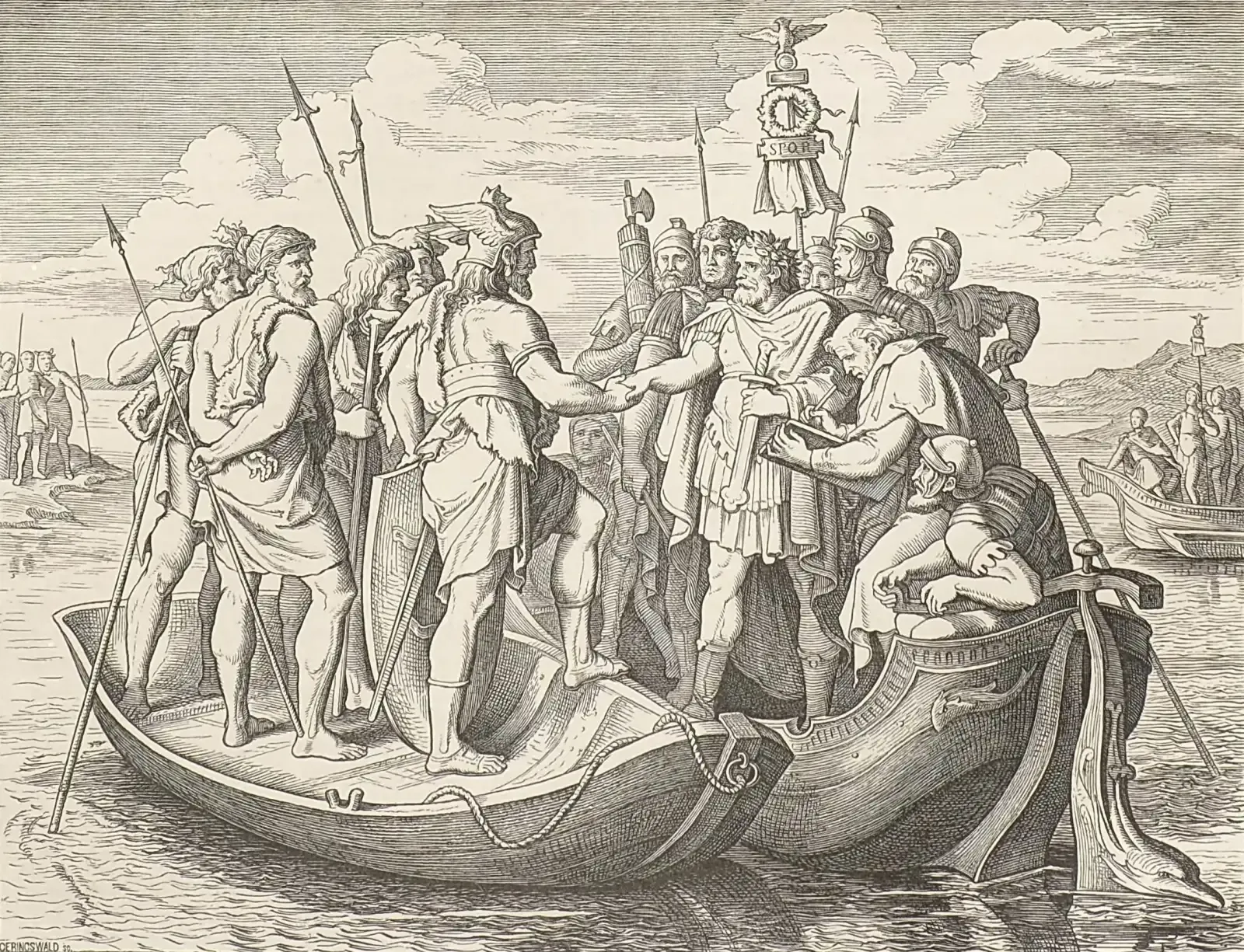
On 9 May 1386, England and Portugal ratified the Treaty of Windsor, beginning the oldest diplomatic alliance still in force. Six centuries later, it was still working - helping to win the Second World War.
Blogs, essays, updates, and occasional notes that sit alongside The Butterfly Effect.
On 9 May 1386, England and Portugal ratified the Treaty of Windsor, beginning the oldest diplomatic alliance still in force. Six centuries later, it was still working - helping to win the Second World War.
On 8 May 1429, Joan of Arc lifted the siege of Orléans and sent the English army marching north. England had been close to winning the Hundred Years' War — they had the law, the victories, and the treaty. What they had not accounted for was the girl.
On 7 May 1794, Robespierre introduced a new state religion to replace Christianity. He had 82 days left to live. The Cult of the Supreme Being is one of the stranger episodes in a Revolution that was already stuffed with strange episodes.
In 1396, a Bavarian teenager named Johann Schiltberger was spared execution at Nicopolis because he was sixteen. Over the next thirty-three years he served as a slave to Bayezid I, Tamerlane, and four of Tamerlane's heirs, crossed into Siberia, and walked home.
On 6 May 1682, Louis XIV moved the French court permanently to Versailles. The palace was not a vanity project. It was the most sophisticated political trap ever built.
On 5 May 1260, Kublai Khan was proclaimed Great Khan at Shangdu - the place Coleridge would later imagine as Xanadu. He went on to conquer all of China, found the Yuan dynasty, and invent fiat money. He also started the process that ended his grandfather's empire.
Alauddin Khalji's market reforms weren't about welfare—they were about power. A look at the ruthless economics that kept an empire armed and fed.
On 4 May 1799, British and allied forces stormed Seringapatam and killed Tipu Sultan, the Tiger of Mysore. General Harris stood over the body and said 'Now India is ours.' It was not the most important battle of the conquest - it was a typical one.
On 3 May 1791, the Sejm of the Polish-Lithuanian Commonwealth adopted Europe's first modern constitution. It abolished the parliamentary chaos that had paralysed Poland for over a century, declared that power derives from the will of the people, and established a functioning constitutional monarchy. Russia invaded within a year.
On 2 May 1611, Robert Barker printed the King James Bible - commissioned by James I to replace the subversive Geneva Bible with a clean, crown-endorsed text. He got what he asked for. The Puritans took it to New England.